Admissions answered 24/7 (855) 627-3422 13992 Aztec St, Sylmar, CA 91342 Verify coverageSend a referral

Six-bed home · Sylmar, CAResidential Treatment in Sylmar in a six-bed home

With residential treatmentResidential treatmentCare where you stay at the program, usually for a few weeks to a few months.Source: NIDA , you move into the program for a while and do the work of recovery there. You get therapy, groups, rest and good meals, with staff in the house day and night. At New Beginnings, residential treatment happens in a real home with no more than six adults, often right after detox under the same roof.

Licensed by the State Department of Health Care Services · License 191315AP · Expires 4/30/2028

  • Joint Commission accredited
  • Licensed therapist (LMFT)
  • Checks every hour
  • Six beds · adults 18+

Can't talk right now? Request a callback · See a day here

4.8Rated 4.8 out of 5 from 17 Google reviews · Read them on Google 

New Beginnings Detox & RecoveryThe basics01 / 12
01What it is

What is residential treatment?

Detox is short medical care that gets you through withdrawalWithdrawalPhysical or mental symptoms that can start when someone cuts back on or stops a substance they use often.Source: MedlinePlus , the sickness that can come when you stop.

As a form of addiction treatment, residential care means you live in the house for the length of your stay. Your days have a steady rhythm: therapy, groups, meals, quiet time and sleep. Staff are awake and on site around the clock, so help is close by.

Living here takes you out of the places and routines that kept the cycle going. That space gives you room to learn why you use, practice new ways to cope, and build a plan for life after. Many people come to residential treatment after medical detox, which happens in this same house.

At a glanceResidential treatment here
What it is
Live-in care with therapy, groups, meals and staff in the house 24/7
Who it's for
Adults whose needs go beyond a weekly appointment
How long
Often a few weeks to a few months, set by your needs and progress
Where
A licensed six-bed home in Sylmar, Los Angeles County
Before it
Medical detoxMedical detoxCare around the clock to help manage withdrawal symptoms.Source: NIDA  first if you’re using or in withdrawal, in the same house

Three levels of care, side by side

Every 30 minstaff check on you, day and nightEvery hourstaff check on you, day and nightAt your sessionsyou live at home in between

Medical detox · in this houseResidential treatment · in this houseOutpatient care · a program near you

Medical care while your body clears alcohol or drugs. Our nurse checks your vital signs, and our medical director manages your medicines.You live in the house, and your days have a steady rhythm: therapy, groups, meals, quiet time and sleep. Staff are awake and on site around the clock.You live at home and come in for scheduled sessions. It can fit when you’re stable, safe at home and can keep up with work or school.

Start here if you’re drinking or using now, or in withdrawal. Our protocol is detox first.Start here right after detox, or directly if you haven’t used in a while.We don’t offer outpatient care. Our case manager refers you to a good match.

Read about medical detoxIs residential the right level? Take the quick checkHow we plan your next step

Where you sleep

In this houseIn this houseAt home

Main focus

Withdrawal, with medical careTherapy, groups and routineDaily life, with sessions

How long

Set by your medical teamOften weeks to monthsSet by that program

At New Beginnings

Offered hereOffered hereWe refer you

What each level is for

Residential treatment is the bridge between detox and daily life

Detox and residential treatment happen in the same house, with the same team. Outpatient care isn’t offered here, so we help you find it.

See residential and outpatient care as a table

Residential vs. outpatient, side by side

Residential (here)Outpatient
Where you sleepIn the houseAt home
Support between sessionsStaff in the house around the clockAt home, with the supports you already have
A good fit whenHome makes sobriety hard, or quitting at home hasn't lastedYou're stable, safe at home and can keep up with work or school
At New BeginningsYesNot offered. We refer you.

Typical length of residential care: NIDA, treatment overview. What each level of care means: The ASAM Criteria. Search licensed programs of every level on FindTreatment.gov, run by SAMHSA.

Next02Right for you?
New Beginnings Detox & RecoveryRight for you?02 / 12
02A quick check

Is residential treatment the right level?

Four quick questions. Answer for yourself or for someone you love. Nothing is saved or sent.

  1. Right now: chest pain, trouble breathing, confusion, or thoughts of suicide?

  2. If you stopped today, would you get shaky, sweaty or sick?

  3. Have weekly therapy, outpatient care or quitting on your own not been enough?

  4. Is home a hard place to stay sober right now, with people using, stress or no support?

Your answer

Answer the four questions.

Your result shows up here as you go.

Not a diagnosis. A clinician decides the right level of care with you.

Learn more about levels of care: FindTreatment.gov, a federal search tool.

Next03A day here
New Beginnings Detox & RecoveryA day here03 / 12
03Daily rhythm

What a day in residential treatment feels like

Structure is part of the care. Tap a time of day to see what usually happens. This is a sample to show the rhythm. Your own schedule comes from your treatment plan, and groups change week to week.

Wake up and check in

  • Up at a set time, so sleep can reset
  • Breakfast from our on-site chef
  • A morning group to check in and set a goal for the day

Why it helps: a steady start can lower stress and make cravings easier to ride out.

Next04Living here
New Beginnings Detox & RecoveryLiving here04 / 12
04The house

Living here: a real home in Sylmar

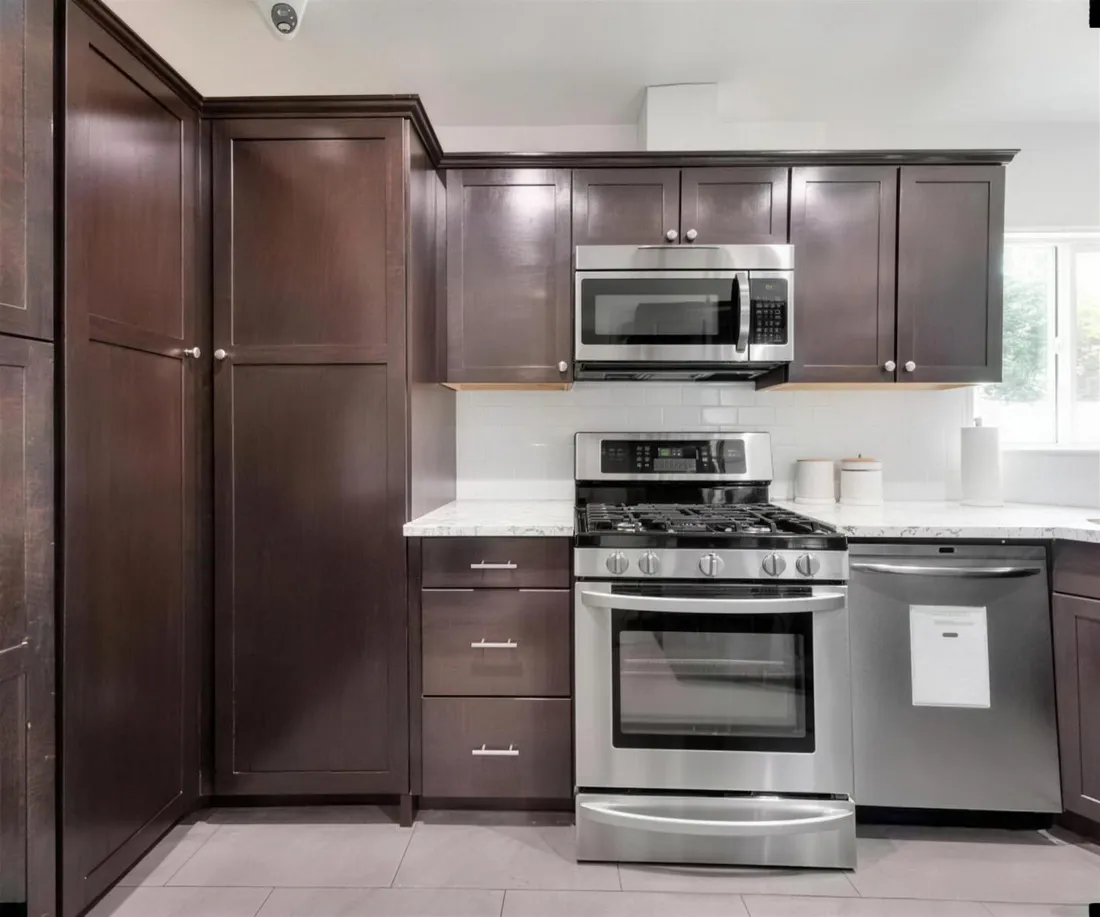
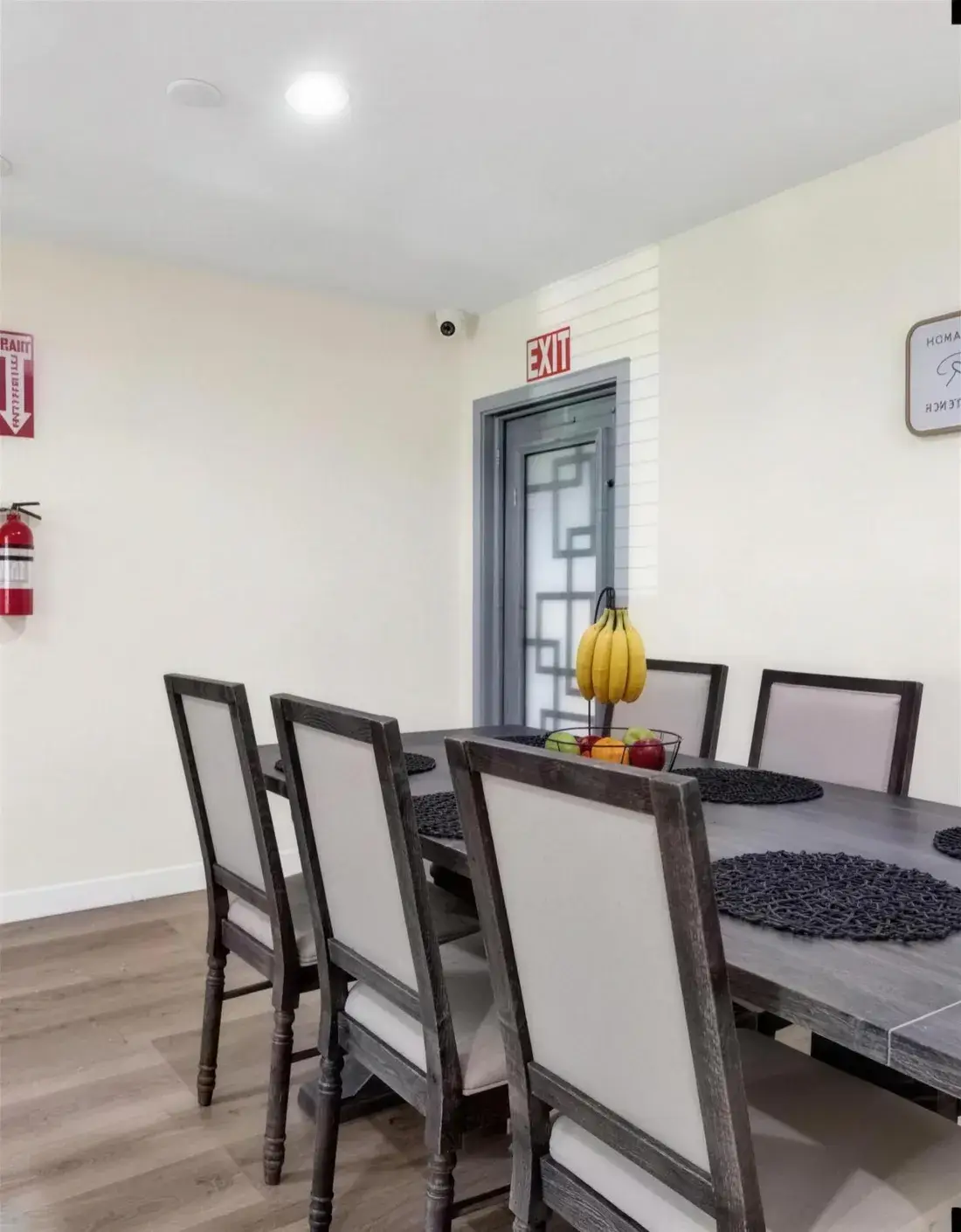
This is the house where residential care happens. No wards, no long hallways. Just a quiet street, a kitchen that smells like dinner, and a patio for fresh air.
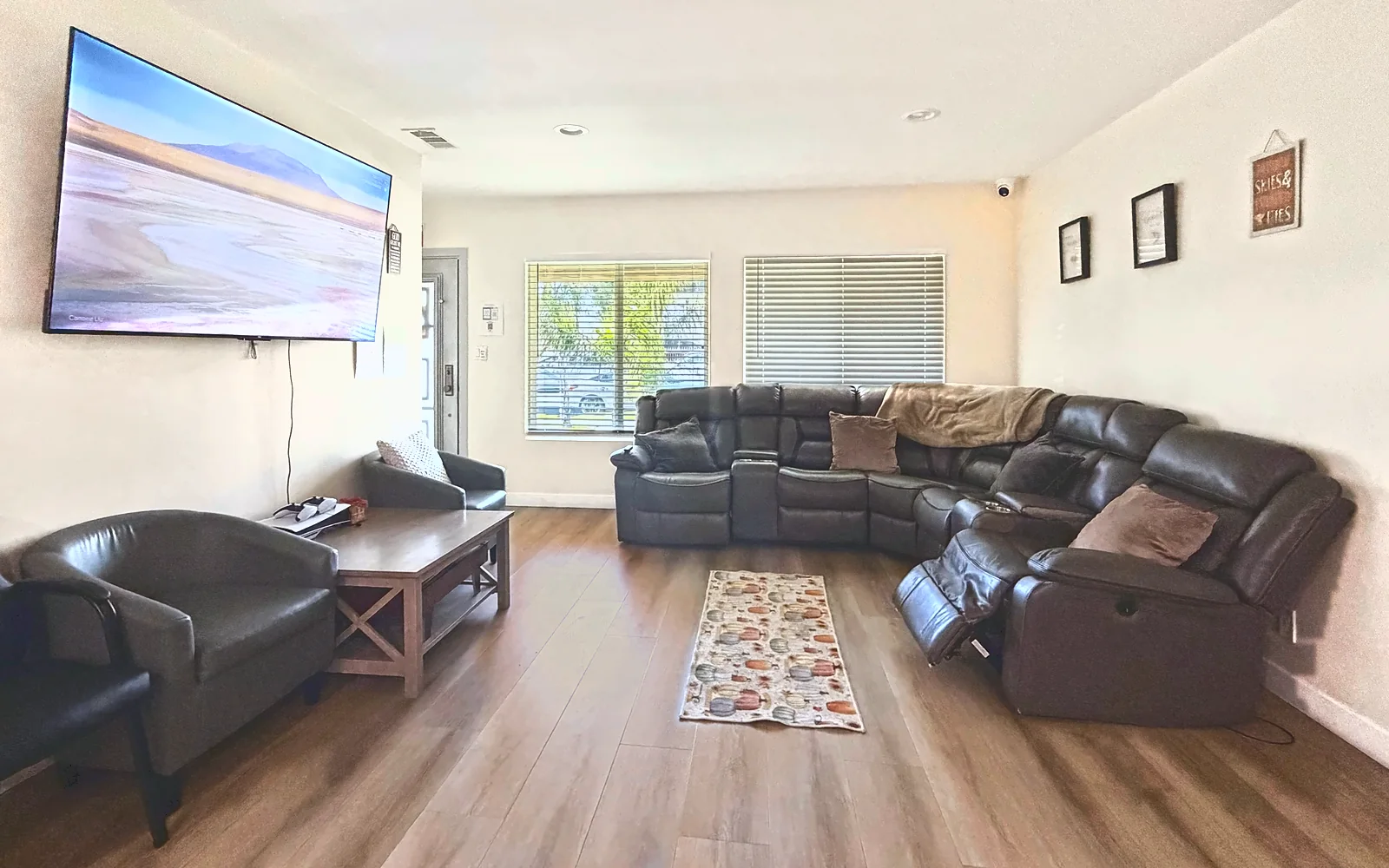
Living room of the New Beginnings residential treatment home in Sylmar, CA
Living roomCouches, a big TV and windows onto a quiet street.
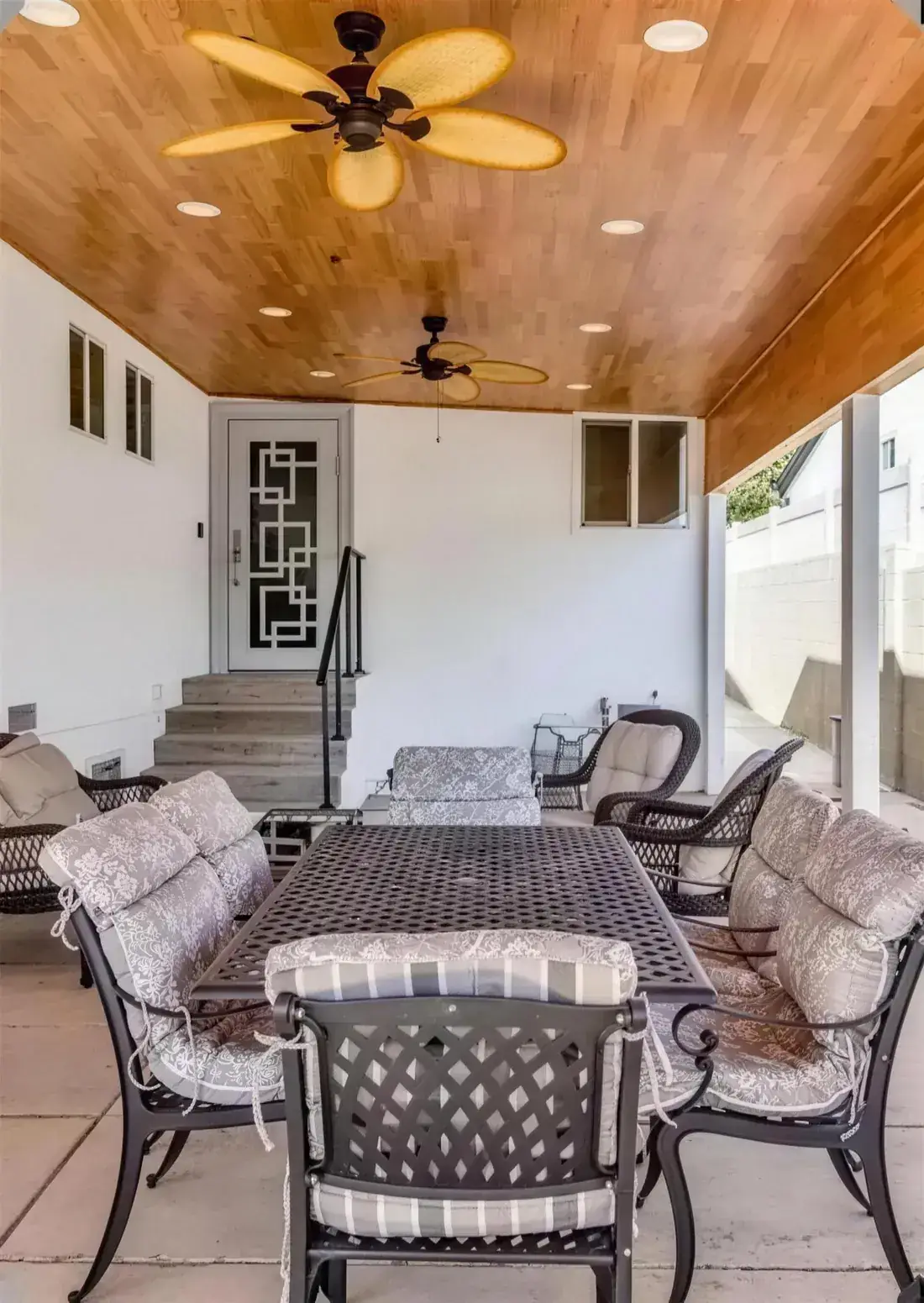
Covered patio with outdoor dining at our residential treatment home
Covered patioShade, a table outside and fresh air.
Kitchen where the on-site chef prepares meals
KitchenWhere meals are made for everyone in the house.
Dining table where residents share meals
Dining roomOne table, so meals are shared.
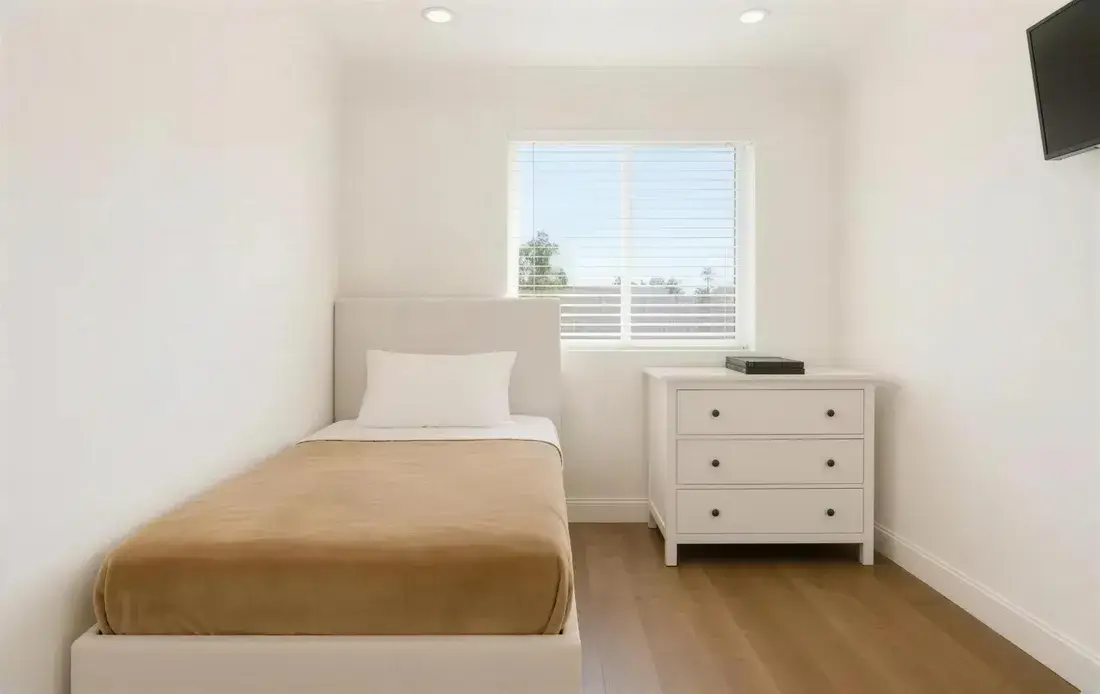
Bright bedroom with a made bed and dresser
BedroomBright and simple, with a made bed and a dresser for your things.
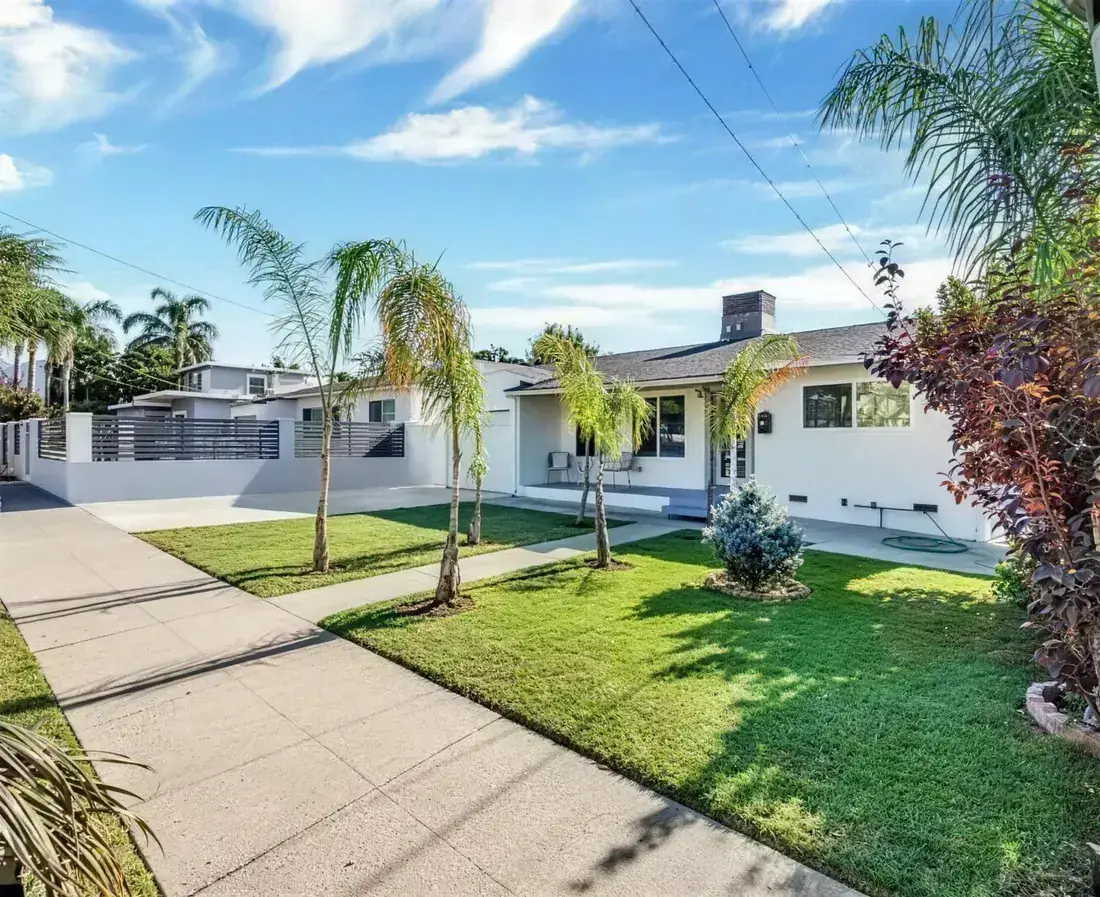
Front yard and palm-lined street outside the Sylmar home
Front yardA quiet, palm-lined street at the foot of the San Gabriel Mountains.

House basics

Can you keep your phone in residential treatment?

Your phone goes into safe storage when you arrive and stays there through your stay. Work calls can be set up ahead of time if your job requires it. Need a number from it? A staff member helps you find it, and you call from the landline.

Who lives at New Beginnings during residential treatment?

Up to six residents, all adults, both men and women. Everyone here is working on the same thing you are.

What should I bring to residential treatment?

A photo ID, your insurance card, and all current medicines in their pharmacy bottles. Around seven days of easy-to-wash clothes, plus important numbers written down. Please don't bring alcohol, drugs, weapons, valuables or much cash.

Are meals provided during residential treatment at New Beginnings?

Yes. Our chef cooks in the house kitchen. Tell us about allergies or diet needs on the first call.

Can you leave residential treatment if you want to?

Yes. Treatment here is voluntary. Staff ask you to talk with them first, so you can leave with a plan and a place to go next.

How do I get directions to New Beginnings in Sylmar?

13992 Aztec St, Sylmar, CA 91342. That's the northeast San Fernando Valley, near the 5, 210 and 14 freeways. Get directions.

Check the state record for this house: DHCS facility record.

Next05Therapy
New Beginnings Detox & RecoveryTherapy05 / 12
05How sessions work

How therapy works in residential treatment here

Therapy is led by our clinical director, Mehrnaz Ravanbakhsh. She's licensed in California as a marriage and family therapist (LMFT). She blends methods with research behind them and fits them to you. When anxiety, depression or trauma come too, our mental health services work on both. Pick a hard moment below to see how each approach works with it.

  • CBTCBT · cognitive behavioral therapyTalk therapy that helps you spot thoughts that aren’t true or helpful. Then you practice new ways to act.Source: NIMH Cognitive behavioral therapy

    Notice harmful ways of thinking, question them and change how you respond.

  • DBTDBT · dialectical behavior therapyTherapy that builds skills. You learn to stay present, calm strong feelings, avoid acting in ways that hurt you and get along better with others.Source: NIMH Dialectical behavior therapy

    Skills for strong emotions and urges, with acceptance and change side by side.

  • MIMotivational interviewingMotivational interviewingA way of talking things through that builds your own reasons to change. You weigh the pros and cons, make a plan and build confidence.Source: NIAAA 

    Talk through mixed feelings and find your own reasons to change.

  • RPRelapse prevention

    Spot high-risk situations and build a plan for each one.

Pick a moment people often describe in residential treatment

CBT

Notice the thought, like “just one won’t matter,” and test it against what happened last time.

DBT

Skills to ride out the urge for a few minutes without acting on it.

Motivational interviewing

Reconnect with your own reasons for being here.

Relapse prevention

Name evenings as a high-risk time and plan what you’ll do instead.

CBT

Look at the thought “I’m fine now” and what it leaves out.

DBT

Get through the strong feeling first, then decide with a clear head.

Motivational interviewing

Talk it through with your therapist: what you want, and what’s in the way.

Relapse prevention

Treat it as a warning sign and plan for it with your team.

CBT

Catch thoughts like “they’ll never forgive me” and look for what’s missing.

DBT

Practice asking for what you need while staying calm.

Motivational interviewing

Sort out what you want that relationship to look like.

Relapse prevention

Plan for family stress as a trigger, before you leave the house.

CBT

Notice racing thoughts and slow them down, one at a time.

DBT

Skills to calm your body when your mind won’t settle. Staff are awake if you need them.

Motivational interviewing

Talk through what’s keeping you up in your next session.

Relapse prevention

Build a night routine into your plan for life after.

What sessions feel like

  • Kind and direct. You'll be heard, and you'll be challenged too.
  • Trauma-informed. Your past shapes the pace, and you stay in control of what you share.
  • Insight that turns into action. Understanding why matters most when it changes what you do.
  • A whole person, not a diagnosis. Your history, relationships and goals all count.

Learn more: CBT and behavioral therapies (NIDA) · DBT for substance use (Dimeff & Linehan, NIH PubMed Central) · DBT’s four skill areas (NIH PubMed Central) · Relapse prevention (Larimer, Palmer & Marlatt, NIH PubMed Central) · Motivational interviewing (SAMHSA TIP 35)

Next06Mental health
New Beginnings Detox & RecoveryMental health06 / 12
06Both at once

Anxiety, depression or trauma too? Residential treatment works on both

Many people living with a substance use disorderSubstance use disorderWhen drinking or using leads to health problems. It can also cause trouble at work, at school or at home.Source: MedlinePlus  have a mental health condition too. Each one can feed the other in a loop. In residential treatment, help is in the house when that loop starts, day or night.

Pick any link in the loop to see where residential care steps in, and who helps. More on dual diagnosis treatment.

Sources: SAMHSA: co-occurring disorders · NIMH: substance use and co-occurring mental disorders

In the U.S., 2024

21.2million

adults lived with both a mental illness and a substance use disorder, SAMHSA’s national survey found.

Each one can raise the risk of the other. That’s why both are part of your plan from the first week.

1 of 4links explored

Link 1 of 4 · Anxiety or low mood

When anxiety or low mood start it

Where residential care steps in

  • One-on-one therapy with our licensed therapist looks at what’s under the use, like anxiety, grief or trauma.
  • Our medical director checks your health and the medicines you take, and decides if medicine can help.

Who helpsTherapist · Medical director

Link 2 of 4 · Drinking or using to cope

When using becomes the way to cope

Where residential care steps in

  • Living in the house takes you out of the places and routines that kept the cycle going.
  • Groups on coping skills and cravings give you other ways through a hard moment.

Who helpsThe house · Groups

Link 3 of 4 · Worse sleep, guilt, withdrawal

When sleep, guilt and withdrawal pile up

Where residential care steps in

  • If you’re using or in withdrawal, our protocol is detox first, in this same house.
  • You’re up at a set time each day, so sleep can reset.
  • Staff check on you every hour, day and night.

Who helpsMedical team · Staff awake 24/7

Link 4 of 4 · Symptoms come back stronger

When symptoms come back stronger

Where residential care steps in

  • Hourly checks help us notice changes in mood early.
  • Relapse prevention helps you spot your warning signs and plan for each one.
  • Before you leave, your case manager refers you to your next step, so care keeps going.

Who helpsTherapist · Case manager

Which services help anxiety, depression, trauma and more

If someone is in a mental health crisis, like psychosisPsychosisA group of symptoms where a person loses some contact with what’s real.Source: NIMH  or danger of suicide, the safest first step is a hospital or crisis team. Call 911, or call or text 988.

Next07Your care team
New Beginnings Detox & RecoveryYour care team07 / 12
07Small by design

Six beds. Staff who know you by name.

Here are the people who do this work with you.

The house switchboard

Pick a need. See who picks it up.

Goes straight to

Behavioral healthBehavioral healthCare for mental health and substance use, like therapy and counseling.Source: HealthCare.gov  techs

Staff are awake and on site all night. Tell the tech on duty, who can bring in the nurse or doctor if it’s a health concern.

Goes straight to

Bret Bellard, MD

Our medical director oversees your health and any medicines you take. Priscilla Bowser, LVN, our nurse, keeps an eye on how you’re doing.

Goes straight to

Mehrnaz Ravanbakhsh, LMFT

Our clinical director leads your therapy. Bring it to your next one-on-one, or tell staff you need to talk sooner.

Goes straight to

Jordan Owrey

Our case manager helps with work and family needs while you’re here.

Goes straight to

Maria Sanchez

Our program director runs the house and the daily schedule.

Goes straight to

Erichoine Brown

Our chef cooks the meals you eat in the house.

Goes straight to

Jordan Owrey

Our case manager refers you to what’s next, before your last day.

The house never holds more than six adults. In a home this size, staff notice the small changes: a bad night, a quiet day, a win worth naming.

123456

Never more than six residentsMen and women, 18 and older

24/7Staff awake and on site
1 hrSafety checks in residential, day and night
1Team from detox through residential
MR

Mehrnaz Ravanbakhsh, LMFT

Clinical Director & Therapist. Leads your therapy. Trained in CBT, DBT and motivational interviewing. CA license LMFT 149472.

BB

Bret Bellard, MD

Medical Director. Oversees your health and any medicines you take.

MS

Maria Sanchez

Program Director. Runs the house and the daily schedule.

JO

Jordan Owrey

Case manager. Helps with work and family needs and refers you to what's next.

PB

Priscilla Bowser, LVN

Our nurse. Keeps an eye on your health during your stay.

EB

Erichoine Brown

Our chef. Cooks the meals you eat in the house.

RADT

Behavioral health techs

Registered Alcohol and Drug Technicians. They do the hourly checks.

You

You

The most important person on the team. Your goals set the plan.

Next08Families
New Beginnings Detox & RecoveryFamilies08 / 12
08Staying close

Where families fit during the stay

Your care can include the people who love you.

Substance use touches the whole family. Flip the switch to see what changes once your loved one signs a release.

24 of 4 open to you

Visits begin after detox and are set up with staff ahead of time. Tap any card to flip just that one.

Why the written consent? Federal law (42 CFR Part 2) protects treatment records more strictly than most health records. See our Notice of Privacy Practices.

More on family support →

Next09After you leave
New Beginnings Detox & RecoveryAfter you leave09 / 12
09Your next step

After residential treatment: leaving with a plan

  1. 1

    Medical detox

    Our protocol is detox first for anyone using or in withdrawal.

    Medical detox →
  2. You are here2

    Residential treatment

    Therapy, groups and a daily routine while you live in the house.

    This page
  3. 3

    Your next step

    Outpatient care, a day program, sober living or a therapist. Our case manager sets up the referral before you leave.

    Aftercare planning →

Step 1 of 3 · Detox

A good plan answers four questions

Take one out and watch the plan tip

All four answers are in place.

That’s the plan holding level. Tap any answer to take it out and see what it was holding up.

Where do I go next?

Without it: Your first week home has no next appointment lined up.

What it adds: The level of care that fits, and how to get there.

Who’s in my corner?

Without it: A hard day has no name to call attached to it.

What it adds: People to call, meetings to go to, a therapist to see.

What sets me off?

Without it: A high-risk moment arrives without a plan for it.

What it adds: Your triggers, written down, with what you’ll do instead.

What if I use again?

Without it: One setback can feel like the end, when it’s a sign to adjust.

What it adds: A return to use is a sign to adjust the plan, and you already know who to call.

Why a return to use isn't failure: NIDA says relapse rates for substance use disorders are like those for other long-term conditions, such as high blood pressure and asthma. NIDA: treatment and recovery.

If you used opioids or fentanyl, your tolerance is lower after treatment. An old dose can cause an overdose (MedlinePlus). If someone may be overdosing, call 911 right away. Keep naloxone close and tell the people around you where it is. For free, private help any time, call SAMHSA's National Helpline at 1-800-662-4357.

Next10Accredited
New Beginnings Detox & RecoveryAccredited10 / 12
10Check it yourself

Accredited residential treatment you can verify

Before you trust a program with this plan, check its record.

State license

California DHCS

191315AP

Licensed · current

… days left on this license, as of today

What it includes

  • Residential substance use disorder treatment with detox
  • Incidental Medical ServicesIncidental Medical Services (IMS)Extra medical care the state lets a licensed home give. A trained health worker, or staff they oversee, gives it during detox and treatment.Source: DHCS  approved
  • Six beds, adults

What it doesn’t

A license isn’t a quality rating. It shows the state allows this house to provide this care.

Check it yourself in 3 steps
  1. 1Open the state’s facility map
  2. 2Search 191315AP or New Beginnings
  3. 3Check the status and the expiry date
Open the DHCS record 

The state record

One license includes detox and residential care

California lists this house as one licensed program with six beds. Detox and residential treatment both happen under that license. The card below reads the state's public data, so you see what DHCS shows today.

Open the DHCS record 
DHCS Licensed FacilityState record as of Nov 5, 2026
Facility
New Beginnings Detox & Recovery
License number
191315AP
Status
Licensed
Program
Residential detox (RES-DETOX)
Beds
6
Serves
Adults, co-ed
Incidental Medical Services
Approved
License expires
4/30/2028

Every credential, explained: About New Beginnings.

Next11Paying
New Beginnings Detox & RecoveryPaying11 / 12
11Insurance

PPO plans we've worked with

  • Anthem Blue Cross
  • Blue Cross Blue Shield PPOs
  • BCBS: CA · TX · FL · IL · SC · OK · NC · TN
  • Federal Employee Program (FEP)
  • UnitedHealthcare
  • United Behavioral Health (UBH)
  • Optum
  • Cigna
  • Regence
  • Other PPO? Call us

PPO plans only, all billed out of network. Every plan is different, so we verify your benefits before admission. Insurer names are trademarks of their owners.

Using a PPO for residential treatment

A PPOPPO · preferred provider organizationA type of health plan with a network of doctors and hospitals. You can also use providers outside that network.Source: HealthCare.gov  is a health plan that lets you use providers outside its network. Out of networkOut of networkYour plan’s network is the providers it has contracts with. An out-of-network program isn’t one of them.Source: HealthCare.gov  means we have no contract with your insurance company.

We work with PPO plans only. We're out of networkOut-of-network benefitsOut of network means a provider has no contract with your health plan. These benefits are what your plan offers for that care.Source: HealthCare.gov  with every insurance company, so residential care here runs through your PPO's out-of-network benefits. Our admissions team verifies your benefits for free and goes over them with you by phone.

We don't accept HMOHMO · health maintenance organizationA type of health plan. It usually limits care to its own network, except in an emergency.Source: HealthCare.gov  plans or Medi-Cal. Have Medi-Cal in Los Angeles County? Call the county's 24/7 line at 1-800-854-7771 (option 2).

Free benefits check

Free, by phone, before admission:

  1. Share your PPO details
  2. We verify your out-of-network benefits
  3. We call you to go over them
Check my benefits
Next12Questions
New Beginnings Detox & RecoveryQuestions12 / 12
12Answered

Residential treatment questions, answered

The basics

What is residential treatment for addiction?

It's care where you live at the program for a while. You get therapy, groups, meals and a steady routine, with staff in the house day and night. At New Beginnings, residential treatment takes place in a six-bed home in Sylmar.

How long does residential treatment last?

Often a few weeks to a few months. That's the usual range the National Institute on Drug Abuse describes for residential care. Your own length depends on your needs and your progress. Your team reviews it with you as you go, and your case manager plans the next step before you leave.

What's the difference between residential and outpatient treatment?

In residential treatment, you live at the program, with staff on site around the clock. In outpatient treatment, you live at home and come in for scheduled sessions. Residential treatment fits when home makes staying sober hard, or when outpatient care didn't hold. We offer residential treatment and refer you to outpatient care when that fits better.

Is residential treatment the same as inpatient treatment?

Mostly, yes. People often use residential treatment and inpatient treatment for the same thing. Both mean you stay overnight. Residential care takes place in a home, with therapy at the center. Hospitals give inpatient care to people who need doctors or nurses at the bedside around the clock.

Who needs residential treatment instead of outpatient treatment?

Residential treatment may fit when quitting at home hasn't lasted, when home makes recovery harder, or when someone needs staff nearby day and night. Our team talks this through on a short call. We don't offer outpatient programs, so if outpatient care fits better, we refer you.

Do I have to go through detox first?

If you're drinking or using now, or in withdrawal, yes. Our protocol is detox first, here in this house. If you haven't used in a while, you can start residential treatment directly. We sort this out on the first call.

Therapy & your stay

What kind of therapy will I get?

You meet one-on-one with Mehrnaz Ravanbakhsh, our clinical director. She's a marriage and family therapist (LMFT). You also join groups. She draws on CBT, DBT, motivational interviewing and relapse prevention, and fits them to you. Sessions look at what's under the use, not just the use itself.

Does residential treatment at New Beginnings treat anxiety, depression or trauma too?

Yes, alongside substance use. Your therapist works on both, and the medical director reviews any medicines you take. If someone is in a mental health crisis, a hospital or crisis team is the safer first step.

Can I use my phone for work during residential treatment?

Only if it's arranged before admission. Phones are put away during your stay so your attention stays on recovery.

Can my family visit or get updates?

Yes. Visits begin after detox and are set up with staff ahead of time. We share updates only with people you name in a written consent, because federal law protects treatment records.

Getting started

How do I get admitted to residential treatment?

Start with one phone call to (855) 627-3422, day or night. Admissions asks about your substance use, your health and your insurance. We check whether residential treatment fits, whether a bed is open and your PPO's out-of-network benefits. If you're drinking or using now, or in withdrawal, our protocol is detox first, in the same house.

Does insurance pay for residential treatment?

We work with PPO plans only, through their out-of-network benefits. Our team verifies your benefits for free and goes over them with you by phone. We don't accept HMO plans or Medi-Cal.

Where is the New Beginnings residential treatment home?

At 13992 Aztec St in Sylmar, CA 91342, in the northeast San Fernando Valley at the foot of the San Gabriel Mountains. The house is near the 5, 210 and 14 freeways and close to San Fernando, Granada Hills, Pacoima and Santa Clarita.

What happens when residential treatment ends?

Your case manager refers you to the next level of care, like outpatient treatment, sober living or a therapist. Outpatient care isn't offered here, so we help you find a strong match.

Detox steadies the body.Residential treatment gives you room to rebuild.

Sources: NIDA, treatment · SAMHSA, co-occurring disorders · HHS, 42 CFR Part 2.

Back tothe top