
Call (855) 627-3422Verify my coverage
Private · No cost to call · Day or night
In danger right now? Call 911. Thinking about suicide? Call or text 988.
Most people start with medical detox and step down to residential treatment in the same home.
Call (855) 627-3422 →Private · No cost to call · Day or night
In danger right now? Call 911. Thinking about suicide? Call or text 988.
Family support at New Beginnings means you’re not left guessing. With your loved one’s written permission, our care team keeps you updated. Our family therapist holds sessions in person, by video or by phone. And visits are set up ahead, during detox or residential care.
You can call before they agree to anything. It’s free and private. · Request a callback
Licensed by the State Department of Health Care Services · License 191315AP · Expires 4/30/2028
The 30-second version
Jump to: Understanding addiction What to say How to choose What we can share If they’re still using Questions
Addiction affects the whole family, and so does recovery. Family support at New Beginnings has three parts. Because privacy law protects addiction treatment records, each one starts with your loved one’s written permission, and our team can walk you both through that step.
Family sessions. Our clinical director, Mehrnaz Ravanbakhsh, is a licensed marriage and family therapist (LMFT). She meets with families at the house. If you live far away, you can join by video or phone.
Updates. With a signed release, our care team can tell you how your loved one is doing and answer your questions.
Visits. We arrange visits ahead of time with you, during detox or residential care.
It’s hard to watch someone you love keep using when it’s hurting them. It helps to know what’s happening. NIDA, the federal institute on drug use and addiction, calls addiction a long-term health condition that changes how the brain works. It is not a lack of love for you.
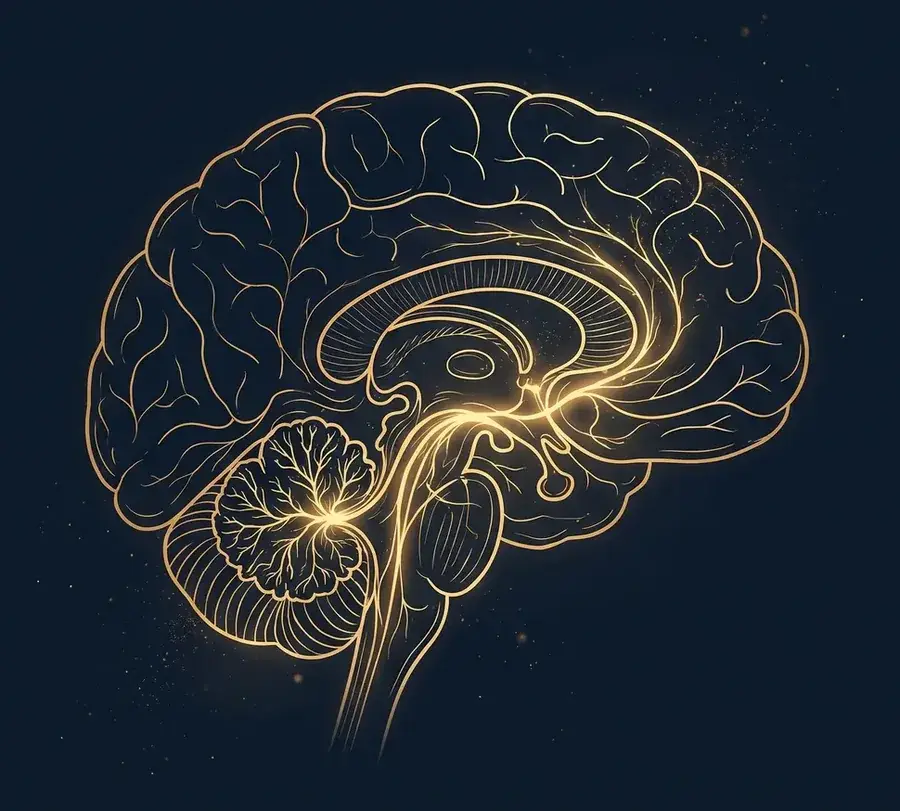
Reward · basal ganglia
This area drives healthy wants, like enjoying food and friends. It also builds habits and routines. Repeated use changes it, so using becomes a routine the brain pushes for.
Stress · extended amygdala
This area handles feelings like worry, irritability and unease. Those feelings show up in withdrawal, after the high fades. They push a person to use again just to feel okay.
Self-control · prefrontal cortex
This area helps us plan, decide and control impulses. NIDA says the first choice to use is usually voluntary. Over time, self-control can become badly impaired. That’s the hallmark of addiction.
No single thing causes addiction. NIDA points to a mix of factors, like genes, mental illness and hard experiences such as abuse. Your love didn’t cause it, and you can’t fix it alone. You can help.
Yes. NIDA calls addiction treatable. Like heart disease or asthma, treatment manages it over time rather than curing it.
It can happen. NIDA says a return to use is a sign to restart or change treatment, not proof that treatment failed.
Sources: NIDA, Drug Misuse and Addiction · NIDA, Drugs and the Brain · NIDA, Treatment and Recovery.
Next03What to sayGood family support often starts with one honest conversation. Pick where things are right now. You’ll get words to try and words to skip. Nothing you choose is saved or sent.
Try saying
Try to avoid
Why: SAMHSA advises listening without judgment and speaking with kindness, and notes it can take many conversations before someone gets help.
Try saying
Try to avoid
Why: One study looked at families of people with drinking problems. A calm approach called CRAFT got 64% of loved ones into treatment. A confrontational intervention got 30%. Many families never went through with the confrontation at all.
Try saying
Try to avoid
Why: SAMHSA suggests asking how you can support someone who wants help. And your questions are always welcome: our team will answer what we can, and share details about their care with their permission.
Sources: SAMHSA, How to Talk to Someone About Help (2023) · Miller, Meyers & Tonigan, Journal of Consulting and Clinical Psychology (1999)
Family support can make a real difference, both before treatment and during it. Here’s what the research shows.
Getting a loved one into treatment
Which approach helped more families?
130 family members of people with drinking problems, each trained in one approach. The bars show how many of their loved ones entered treatment.
All three approaches helped the family members themselves feel better. Al-Anon is still a strong source of support for you; it just wasn’t built to get a loved one into treatment.
Source: Miller, Meyers & Tonigan, Journal of Consulting and Clinical Psychology (1999). A later review found CRAFT about twice as effective as the approaches it was compared with: Archer et al., Addiction (2020).
Next05Helping that helps“Family involvement in SUD treatment is linked with increased rates of entry into treatment, … decreased dropout rates during treatment, and better long-term outcomes.”
SAMHSA, TIP 39: Substance Use Disorder Treatment and Family Therapy (2020)
Most families do everything out of love, and some of it helps more than the rest. CRAFT, the approach from the study above, teaches a few simple shifts. Tap a moment many families face to see the skill that fits it.
Swipe for more →
Skill · Positive reinforcement
Spend time with them, say what you enjoyed, do something they like. Celebrating the good days works far better than punishment or confrontation.
Skill · Active listening
Ask how they’re doing and reflect back what you hear. It shifts the tone away from anger or lecturing, so a real conversation can happen. Pick a calm moment.
Skill · Natural consequences (a healthy boundary)
It’s natural to want to make excuses for them or fix it. CRAFT suggests deciding ahead what you will and won’t do, then letting safe consequences happen. That can encourage change.
The exception · Safety first
Natural consequences are never about danger, like drinking and driving. For an overdose, a seizure or someone who won’t wake up, call 911 right away.
Skill · Self-care
Sleep, eat, and lean on people you trust or a family group. When you’re healthier, you’re in a better place to help. It isn’t selfish.
Move quickly
Mixed feelings about change are normal, so readiness can come and go. SAMHSA says a quality program can see someone within 48 hours. You can call us together, any hour.
Call (855) 627-3422Sources: Partnership to End Addiction, the CRAFT approach · SAMHSA TIP 35 (mixed feelings about change are normal) · SAMHSA, Finding Quality Treatment.
Next06Choosing a programYou may be calling several places. SAMHSA, the federal agency for addiction and mental health, lists signs of quality treatment that any family can check. Use them on every program you call, including us. Tap a sign to see what to ask, how we answer and how to check it yourself.
Ask any program: “Are you licensed by the state, and in good standing? What’s your license number?”
Our answer: Licensed by the state (DHCS), license 191315AP, good through 4/30/2028. The Joint Commission accredits our live-in care. We’re also LegitScript certified.
Check our state license ↗ Check our Joint Commission listing ↗
Ask any program: “Who will take care of my loved one, and what are their licenses?”
Our answer: Our medical director is Bret Bellard, MD. Our clinical director is Mehrnaz Ravanbakhsh, LMFT 149472. We also have a nurse (LVN), a case manager and five registered alcohol and drug techs. Staff are awake on site 24/7.
Ask any program: “Do you offer FDA-approved medication for alcohol and opioid use disorders?”
Our answer: Our doctor, Bret Bellard, MD, prescribes detox medicine. He also handles mental health medicine during the stay. Ask us on the call which medicines fit your loved one.
Ask any program: “Which therapies do you use? Do you also care for physical and mental health?”
Our answer: One-on-one therapy and groups. We use CBT, DBT, motivational interviewing and relapse prevention. A nurse and our doctor watch physical health. We also treat mental health issues that come with substance use.
Ask any program: “How will our family be involved?”
Our answer: Family sessions with our family therapist. Updates from our care team, with your loved one’s written permission. Visits arranged ahead. That’s what this page is about.
Ask any program: “What happens when treatment ends?”
Our answer: Before your loved one leaves, our case manager refers them to a next step. That could be outpatient care, a therapist, sober living or a support group. They leave with referrals and phone numbers.
SAMHSA’s rule of thumb: if a program can’t see your loved one within 48 hours, look for another one.
Our answer: Admissions answers 24/7, and admission is sometimes the same day.
In California, it’s illegal for licensed programs and their staff to give or receive anything of value for a referral. Ask: “Does anyone get paid if we choose you?” Our answer is no, in either direction.
California law strictly limits travel and housing offers from treatment programs. Federal law bans paying someone to use a treatment program. We never offer gifts, cash or perks for choosing us.
Every licensed program in California has a license number you can look up on the state’s facility map. Ours is 191315AP.
SAMHSA lists family involvement as a sign of quality treatment. Here, families can join sessions and get updates with permission.
SAMHSA says quality programs offer support beyond the first round of treatment. Ask what happens on the last day.
A good program gives you time to ask questions and check its license. Call us as many times as you need. You don’t have to decide on the first call.
Worried about a program? You can report it to the state: DHCS complaints line (877) 685-8333 or sudcomplaints@dhcs.ca.gov.
Sources: SAMHSA, Finding Quality Treatment for Substance Use Disorders · California Health and Safety Code 11831.6 and 11831.65 · 18 U.S.C. § 220 · DHCS complaints.
Next07PrivacyPrivacy is part of family support done right. Addiction treatment records have extra federal protection. Flip the switch to see what changes when your loved one signs a release for you.
Can staff confirm my loved one is here?
Not yet. We know that’s hard. Without written permission, federal law doesn’t let us say whether someone is a patient.
Yes. We can confirm they’re here and how to reach the care team.
Can I get updates on how they’re doing?
Not about them yet. You can still call us any time, and we’ll answer your general questions and support you.
Yes, the updates the release allows. Our care team shares them with you.
Can I join family sessions?
Family sessions start once your loved one says yes and signs.
Yes. Sessions happen in person, by video or by phone.
Can I call to talk about my own worries?
Always. You can call us 24/7, free and private.
Always. You can call us 24/7, free and private.
Your loved one chooses who gets information and what kind. They can change or take back their permission. The release form spells out exactly what we may share.
Based on federal law: 42 CFR Part 2, including §2.13 (confirming someone is a patient) and §2.31 (what a written consent must include). See our privacy notice.
Family support looks a little different at each stage. Tap each stage to see where you fit in.
Stage 1
You can call us 24/7, even before your loved one agrees to anything. We’ll listen to what’s going on, explain medical detox and residential treatment, and talk through next steps. The call is free and private.
Your part: share what you’re seeing. You don’t need to have the answers.
Stage 2
Your loved one talks with our team, and we check that our six-bed home is the right fit. This is when they choose who can get updates by signing a release.
Your part: encourage them, and ask them about signing a release for you.
Stage 3
Staff are awake in the house around the clock. Phones are stored during the stay, so contact usually goes through our team. Visits can be arranged ahead, and with a release, our care team keeps you updated.
Your part: give them room to rest, and reach out to our team with questions.
Stage 4
Therapy goes on in the same house. You can join family sessions in person, by video or by phone. Visits are set up ahead.
Your part: join family sessions when they’re offered, and keep looking after yourself.
Stage 5
Our case manager helps your loved one plan what comes next. That might be outpatient care, sober living or a therapist. Then they make the referral.
Your part: ask how you can support the plan at home.
Family therapy for addiction is a core part of family support here. Family sessions give you and your loved one a calm, guided place to talk about what happened, what helps and what comes next. A trained therapist keeps the conversation safe and on track.
Our clinical director, Mehrnaz Ravanbakhsh, LMFT, leads the sessions. LMFT means licensed marriage and family therapist. You can join at our Sylmar home. If you live far away, join by video or phone.
Your loved one chooses who takes part. Sessions start once they agree and sign a release.
Research summary: SAMHSA reports family counseling in addiction treatment is “positively associated with increased treatment engagement and retention rates” (TIP 39, 2020).
Ways to join
Clinical Director & Therapist
California license LMFT 149472
Staying connected is part of family support, too. Visits are arranged ahead with our team, during detox or residential care. Call us to set a time that works for your loved one and for the house.
Phones are stored during the stay so residents can focus on getting well. Exceptions are set up ahead of time, like for work. Ask our team how to reach your loved one.
Updates come from our care team, with your loved one’s written permission.



Research describes relapse as a gradual process with stages. It can start before anyone even thinks about using. Spotting the early signs gives everyone the earliest chance to step in. Tap each stage.
Signs you may notice
What can help
Gently say what you’ve noticed, without blame. Encourage rest, meals and their next appointment. The common thread here is poor self-care.
Signs you may notice
What can help
Ask them to reach out today to their therapist, program or sponsor. You can call us any hour to talk it through.
If they use again
What can help
Stay calm and stay connected. A return to use means it’s time to restart or change treatment, not that it failed. Call their program, their doctor or us.
Sources: Melemis, Relapse Prevention and the Five Rules of Recovery, Yale Journal of Biology and Medicine (2015) · NIDA, Treatment and Recovery. This is general information, not medical advice.
Next12Support for youLoving someone with an addiction is hard on your own health. These groups are free or low cost, and you can go whether or not your loved one is in treatment. Filter to find a fit.
No group matches that filter. Try “All”.
Being ready for an overdose isn’t giving up hope. It’s one more way to protect someone you love while you help them toward care. Tick off what you have in place. Nothing is saved.
Sources: CDC, Lifesaving Naloxone · CDC, What to Do If You Think Someone Is Overdosing · California Health and Safety Code 11376.5. This is general information, not legal or medical advice.
No answer matches that yet. Call (855) 627-3422 and ask us directly.
Family support here
Family support at New Beginnings has three parts. Our licensed marriage and family therapist holds family sessions in person, by video or by phone. With your loved one's written permission, our care team keeps you updated. And visits are arranged ahead, during detox or residential care. You can also call us 24/7 with your own questions.
Yes. You can call us 24/7, even before your loved one agrees to anything. We'll listen to what you're seeing, explain medical detox and residential treatment, and talk through next steps. The call is free and private.
Yes. Our clinical director, Mehrnaz Ravanbakhsh, LMFT, leads family sessions. You can join at our Sylmar home, or by video or phone. Your loved one chooses who takes part. Sessions start once they agree and sign a release.
Yes. Visits are arranged ahead with our team, during detox or residential care. Call us to set a time that works for your loved one and for the house.
Phones are stored during the stay so residents can focus on getting well. Exceptions are set up ahead of time, like for work. Ask our team how to reach your loved one.
Privacy & paying
Only with their written permission. We know that can be hard to hear. Federal law (42 CFR Part 2) protects addiction treatment records, so without a signed release we can't confirm that someone is a patient. You can still call us any time for general questions and support.
Your loved one signs a release that names you and says what we may share. Then our care team can give you the updates it allows. Your loved one can change or take back that permission.
We work with PPO plans only and bill through your plan's out-of-network benefits. Our admissions team verifies your loved one's benefits for free and goes over them with you by phone. We don't accept HMO plans or Medi-Cal. For Medi-Cal in Los Angeles County, call the county's 24/7 line at 1-844-804-7500.
Yes. Calls to our admissions team are private, and you don't have to give your loved one's name to ask questions.
Choosing a program
Check that it's licensed by the state and in good standing. In California, you can look up licensed programs on the DHCS facility map. SAMHSA lists other signs too: trained staff, medicine when needed, therapies backed by research, family involvement and support after treatment. Be careful with any program that offers gifts, free rent or travel to win you over.
Ask if they're licensed and in good standing. Ask who will care for your loved one and which therapies they use. Ask if they offer FDA-approved medicine for alcohol and opioid use disorders. Ask how families take part and what happens when treatment ends. Also ask if anyone gets paid for referrals. The answer should be no.
Helping your loved one
No. NIDA says no single factor causes addiction. It comes from a mix of things, like genes, mental illness and hard experiences such as abuse. Your love didn't cause it, and you can't fix it alone. But you can help, and you deserve support too.
Listen without judgment and speak with kindness, and pick a calm moment to talk. SAMHSA notes it may take many conversations before someone gets help. Say what you've noticed without labels, and let them know you'll be there when they're ready.
Don't give up, and don't go it alone. Ultimatums you won't keep and surprise confrontations usually don't help. Approaches like CRAFT teach families positive ways to encourage treatment. Get support for yourself, keep naloxone at home if they use opioids, and call us any time to talk it through.
CRAFT stands for Community Reinforcement and Family Training. It teaches family members calm, kind ways to help a loved one toward treatment. A 1999 study looked at families of people with drinking problems. With CRAFT, 64% of loved ones went into treatment. That compares with 30% for a confrontational intervention and 13% for Al-Anon.
Groups like Al-Anon, Nar-Anon, SMART Recovery Family & Friends and NAMI Family-to-Family are free or low cost, and you can go whether or not your loved one is in treatment. Sleep, eat and lean on people you trust, too. Your health matters on its own. Family support is for you, not only for them.
Give naloxone (Narcan) if you have it, call 911, keep them breathing and on their side, and stay with them until help arrives. Naloxone can wear off. California's Good Samaritan law protects the caller and the person who overdosed from some drug charges when they seek help.
Treatment here is voluntary. We'll ask them to talk with staff first, so we can help them leave as safely as possible and know where they're going. If they've signed a release for you, our team can talk with you about it.
Relapse often builds in stages. Early signs include bottling up feelings, pulling away from people, skipping meetings and poor sleep or eating. Later signs include cravings, glamorizing past use, bargaining and hiding things. If you notice them, say so gently and encourage a call to their program or therapist. For an overdose, call 911.
Our program is for adults 18 and older. Children in the family need support too. NACoA teaches kids that it isn't their fault and isn't theirs to fix. Teens 13 to 18 can try Alateen, part of Al-Anon.
Before your loved one leaves, our case manager works with them on what care comes next, like outpatient treatment, sober living or a therapist, and refers them to it. Ask how you can support the plan at home.
Keep reading
You don’t have to figure this out alone.We’re here for you, and for them.
Back tothe top