
Mental health · Sylmar, CAMental Health Services alongside addiction treatment
Anxiety, depression, trauma and substance use often show up together. Each one can raise the risk of the others. Our mental health services care for both at once, in one calm six-bed home. You get therapy, groups and psychiatric medicine managed by a doctor.
Licensed by the State Department of Health Care Services · License 191315AP · Expires 4/30/2028
- Therapy + groups
- Psychiatric medicine by an MD
- Staff awake 24/7
- Adults 18+
Free and private, 24/7. · Request a callback
What are mental health services at New Beginnings?
Medical detoxMedical detoxCare around the clock to help manage withdrawal symptoms.Source: NIDA is care while your body goes through withdrawalWithdrawalPhysical or mental symptoms that can start when someone cuts back on or stops a substance they use often.Source: MedlinePlus . Withdrawal is the sickness that can come when you stop drinking or using. Residential treatmentResidential treatmentCare where you stay at the program, usually for a few weeks to a few months.Source: NIDA means living here for a while and doing therapy each day.
Mental health services are care for how you think, feel and cope. The most common forms are therapy and medicine. At New Beginnings, these services are part of every stay in medical detox and residential treatment. They’re for adults who also have a substance use disorderSubstance use disorderWhen drinking or using leads to health problems. It can also cause trouble at work, at school or at home.Source: MedlinePlus .
This page explains each of our mental health services, how it helps and how it fits into your stay. Then it shows which conditions we treat and which mental health services help each one.
Source: NIMH, Psychotherapies.
- Who it’s for
- Adults with a substance use disorder and mental health symptoms
- Conditions
- Anxiety, depression, PTSD and trauma, bipolar disorder, ADHD, personality disorders
- Therapy
- CBTCBT · cognitive behavioral therapyTalk therapy that helps you spot thoughts that aren’t true or helpful. Then you practice new ways to act.Source: NIMH , DBTDBT · dialectical behavior therapyTherapy that builds skills. You learn to stay present, calm strong feelings, avoid acting in ways that hurt you and get along better with others.Source: NIMH , motivational interviewingMotivational interviewingA way of talking things through that builds your own reasons to change. You weigh the pros and cons, make a plan and build confidence.Source: NIAAA , relapse preventionRelapse preventionSkills to spot what sets off cravings, like certain feelings or places. You also learn to handle stress before it leads back to using.Source: NIAAA
- Medicine
- Prescribed and managed by Bret Bellard, MD
- Setting
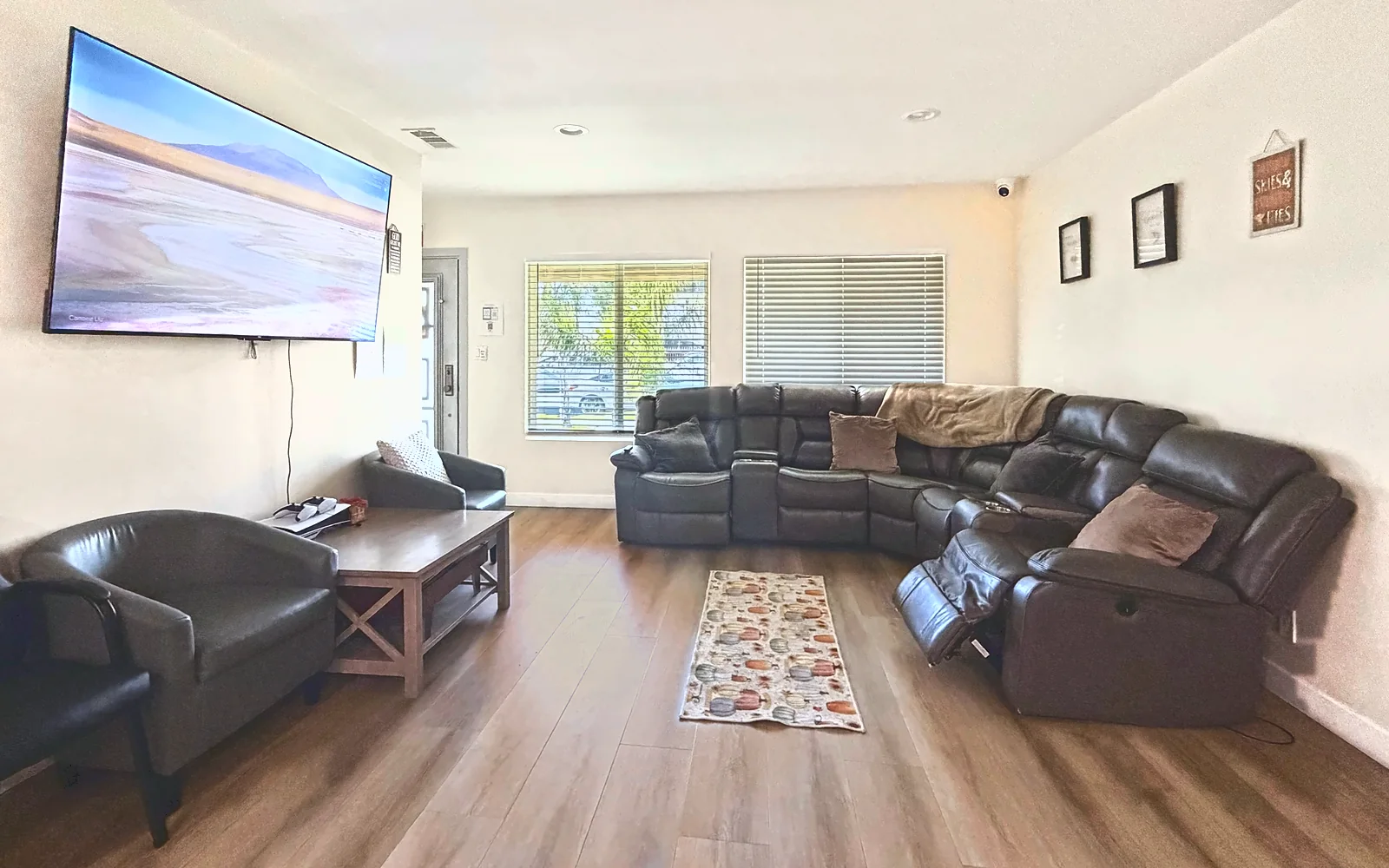
- A licensed six-bed home in Sylmar
Why mental health care belongs in addiction treatment
About 21.2 million adults in the U.S. had both a mental illness and a substance use disorder in 2024, according to SAMHSA. Each one can raise the risk of the other. Care that treats both together, in one plan, is called integrated care.
Having both at once is called co-occurring disorders. People who feel anxious, stressed, depressed or in pain may use drugs to feel better for a while, NIDA explains. So our mental health care starts during medical detox and keeps going through residential treatment, in the same house, with the same small team.
Sources: SAMHSA, Co-Occurring Disorders (2024 National Survey on Drug Use and Health) · NIDA, Common Comorbidities.
Signs worth mentioning on the call
Has any of this lasted 2 weeks or more?
The National Institute of Mental Health suggests getting professional help for severe or distressing symptoms like these that last 2 weeks or more. Tap any that fit you or your loved one.
Nothing tapped yet. You can call anyway. Admissions asks about your mental health on every first call.
0 of 7 tapped. Bring these up on the call. Admissions asks about your physical and mental health and your medicines. During your stay, our medical director and therapist look at them more closely. Only a clinician can diagnose a condition.
Call or text 988 now. If a life is in danger, call 911. You can call us once you’re safe.
Source: NIMH, Caring for Your Mental Health. This is not a test and doesn’t diagnose anything.
Is this the right place? Pick what fits
This is what we do.
We care for both together. If you’re using or withdrawing, our protocol is detox first. Call and we’ll talk through what’s going on, tell you honestly if we’re the right fit, then check your insurance.
We’re not the right fit, and that’s okay.
Our license is for substance use disorder treatment. So we care for mental health conditions along with one, not on their own. These can help instead:
- LA County Department of Mental Health, 24/7: 1-800-854-7771
- 988 Suicide & Crisis Lifeline: call or text 988
- Find a provider: FindTreatment.gov, or ask your doctor
Get help right now.
If someone is in immediate danger, has overdosed, or is having a seizure, call 911. For thoughts of suicide or a mental health crisis, call or text 988. You can call us after they’re safe.
The mental health services we offer, and how each one helps
Because both conditions need care, six mental health services work together during your stay. Tap each one to see what it is, how it helps and how it fits your care.
Led by Mehrnaz Ravanbakhsh, LMFT
One-on-one therapy
- What it is
- Private sessions with our clinical director, a licensed therapist (LMFT).
- The benefit
- A place to go deeper into your own story, at your own pace. It can help with anxiety, low mood, trauma and the patterns that keep pulling you back to substances.
- How it fits your stay
- You and your therapist choose what fits you, using four approaches. Your care plan changes with what you learn.
In the house, with your peers
Group therapy
- What it is
- Small groups in the house, led by our therapist, case manager, nurse and program director.
- The benefit
- You practice skills, share what’s working and learn you’re not the only one.
- How it fits your stay
- Groups are part of every stay. In a six-bed home they stay small, so everyone gets heard.
Managed by Bret Bellard, MD
Psychiatric medicine
- What it is
- Our medical director prescribes and manages psychiatric medicines during your stay.
- The benefit
- Medicine can ease symptoms that therapy alone may not be enough for.
- How it fits your stay
- Our team logs your medicines, and he reviews how you’re doing. More on medicine ↓
Priscilla Bowser, LVN, and our techs
Nursing & safety checks
- What it is
- Our nurse checks your vital signs and how you’re feeling. Our techs check on you every 30 minutes in detox and every hour in residential care.
- The benefit
- Changes get noticed early, day and night.
- How it fits your stay
- Staff are awake and on site all night, so you don’t have to wait until morning to talk to someone.
With your written permission
Family sessions
- What it is
- Sessions with the people you choose, in person, by video or by phone.
- The benefit
- They can help rebuild trust and make home a safer place to recover.
- How it fits your stay
- They start once you agree and sign a release. Family support →
Jordan Owrey, Case Manager
Case management
- What it is
- Help with the worries that follow you in, like work, family and paperwork.
- The benefit
- Less of the stress that makes symptoms worse, and a plan for what comes next.
- How it fits your stay
- Before you leave, your case manager refers you to your next step.
- In medical detox
Mental health care starts here. Staff watch closely, check on you every 30 minutes and care for how you feel right now.
- In residential treatment
Mental health care keeps going through therapy, groups and family sessions, with checks every hour.
- Before you leave
We plan what comes next together, and your case manager refers you to your next step.
Sources: NIMH, Psychotherapies · NIMH, Mental Health Medications.
Next04TherapyThe therapy behind our services: four approaches
Mental health care here draws on four approaches with research behind them, in one-on-one therapy and groups. Here’s what each one is. Loved ones can join through family support. Then pick a moment people often describe, and see how each approach works with it.
- CBTCognitive behavioral therapy
Helps you notice harmful ways of thinking, question them and change how you respond.
- DBTDialectical behavior therapy
Teaches skills for strong emotions and urges, with acceptance and change side by side.
- MIMotivational interviewing
A talk that helps you sort out mixed feelings and find your own reasons to change.
- RPRelapse prevention
Helps you spot high-risk situations and build skills to cope with them.
Swipe for more →
Notice the thought, like “one won’t hurt,” and test it against what really happened last time.
Skills to ride out a strong urge without acting on it.
Reconnect with your own reasons for wanting things to change.
Name the high-risk time and plan what you’ll do instead, before it comes.
Learn how scary thoughts and body feelings feed each other. For anxiety, a form of CBT helps fear go down over time.
Use awareness of the present moment to get through intense emotions.
Talk through what you want, and what’s getting in the way.
Spot panic as a trigger, so it doesn’t turn into reaching for a substance.
Catch the automatic thoughts that turn a hard talk into a fight.
Practice skills for strong feelings and for getting along better with people.
Sort out mixed feelings about the relationship and what you want from it.
Plan ahead for stressful moments at home, before they happen.
Question harsh beliefs about yourself and look at the evidence.
Hold two things at once: accepting where you are while working to change.
Feeling torn about change is normal. Find what still matters to you.
Build a balanced daily life, so recovery has something to stand on.

This shows how these approaches work in general. In session, your therapist helps you choose what fits you. If these thoughts ever include hurting yourself, call or text 988 any time.
Sources: NIMH, Psychotherapies (CBT, exposure therapy) · NIMH, Borderline Personality Disorder (DBT skills) · Dimeff & Linehan, DBT for substance use · SAMHSA TIP 35 · Larimer, Palmer & Marlatt, Relapse Prevention.
Next05MedicinePsychiatric medicine, managed by a physician
Therapy is one part of mental health care. For some people, medicine is another. Bret Bellard, MD, is our medical director. He prescribes your psychiatric medicine here and keeps track of how it’s working. He practices addiction and family medicine. Our team logs your medicines, and he reviews how you’re doing.
- You shareevery medicine and substance you take
- He decideswhat to prescribe, start or change
- We checkhow it’s working, day by day
Medicine is one part of care, not the whole of it. NIMH notes that even when medicine eases symptoms, therapy can help with things like harsh thinking, fears and trouble with people.
You always get to ask questions about your medicine, in medical detox and after. Tap the ones you want to ask, and take your list to your next appointment.
Source: NIMH, Psychotherapies.
Questions worth asking about any medicine
0 questions on your list. Nothing is saved or sent.
Questions adapted from AHRQ, Questions Are the Answer.
Mental health conditions we treat, and which services help
A dual diagnosis is the same thing as co-occurring disordersCo-occurring disordersHaving a mental health disorder and a substance use disorder at the same time. It’s another name for dual diagnosis.Source: SAMHSA : both at once.
Those services come together around what you’re living with. We treat these conditions when they show up with a substance use disorder, which is called a dual diagnosis. In 2023, about 35% of U.S. adults with a mental disorder also had a substance use disorder, NIDA reports. Pick a condition to see what it can feel like and which of our mental health services help.
Anxiety
- What it can feel like
- Worry or fear that doesn’t go away. It shows up in many situations and can get worse over time. In severe cases, everyday moments can bring intense fear.
- With substance use
- NIDA lists anxiety among the conditions that most often show up with a substance use disorder. Alcohol or drugs can feel like relief for a while.
Which of our services help
- One-on-one therapyCBT helps you notice anxious thoughts and look at them in a new light.
- Group therapyYou practice calming skills with others.
- Psychiatric medicineOur medical director decides if medicine can help.
Sources: NIMH, Anxiety Disorders · NIDA, Common Comorbidities
Depression
- What it can feel like
- Everyone feels low sometimes, and those feelings usually pass. Depression can bring severe symptoms that change how you feel, think and handle daily life, like sleeping and eating.
- With substance use
- Depression is on NIDA’s list of conditions that commonly show up with substance use. Coming down from stimulants can look like depression, so we watch how it changes over time.
Which of our services help
- One-on-one therapyPrivate sessions to work through low mood, at your pace.
- Group therapySmall groups can ease the feeling of being alone.
- Psychiatric medicineWhen it fits your care, our medical director manages it.
- Nursing & safety checksIf thoughts of suicide come up, staff are awake 24/7, and 988 is always open.
Sources: NIMH, Depression · NIDA, Common Comorbidities
PTSD and trauma
- What it can feel like
- Feeling stressed or frightened even when you’re not in danger. Many people feel anxious, sad or angry, and have trouble sleeping or focusing.
- With substance use
- PTSDPTSD · post-traumatic stress disorderA condition where stress or fear lasts a long time after something traumatic. It can stay even after you’re safe.Source: NIMH is on NIDA’s list of conditions that often show up with a substance use disorder.
Which of our services help
- One-on-one therapyTherapy moves at your pace, and you choose what to share and when. Your therapist helps you build skills for hard moments.
- Nursing & safety checksStaff are awake for strong memories or nights without sleep.
- Group therapyHearing from peers can help you feel less alone.
Sources: NIMH, PTSD · NIDA, Common Comorbidities
Bipolar disorder
- What it can feel like
- Big, clear shifts in mood, energy and focus. Some people see or hear things that aren’t there, or hold strong false beliefs. Doctors call this psychosisPsychosisA group of symptoms where a person loses some contact with what’s real.Source: NIMH .
- With substance use
- Early on, mood shifts and the effects of substances can be hard to tell apart. That’s why we watch over time, as the next section shows.
Which of our services help
- Psychiatric medicineOur medical director handles your medicine and checks how it’s working.
- Nursing & safety checksRegular checks help us notice changes in mood early.
- One-on-one therapyTalk through what’s changing, and plan for hard days.
If mania or psychosis is severe, a hospital comes first. We help arrange that. If a life is at risk, call 911.
Sources: NIMH, Bipolar Disorder · SAMHSA TIP 42
ADHD
- What it can feel like
- Trouble with focus, feeling restless, or acting before you think. It starts in childhood and often lasts into the teen years and adult life.
- With substance use
- Teens who have a substance use problem often have ADHDADHD · attention-deficit/hyperactivity disorderA condition that makes it hard to focus, sit still or wait to act.Source: NIMH too, NIDA says.
Which of our services help
- One-on-one therapyTherapy helps you build routines, plan ahead and slow down before you act.
- Psychiatric medicineOur medical director decides which medicines fit your care.
- Case managementHelp with work and paperwork, so less falls through the cracks.
Sources: NIMH, ADHD · NIDA, Common Comorbidities
Personality disorders
- What it can feel like
- Borderline personality disorderPersonality disordersLong-term patterns of thoughts and behaviors that make daily life hard.Source: MedlinePlus makes strong feelings hard to manage. It can lead to acting on impulse. It can also shape how you see yourself and the people close to you.
- With substance use
- NIDA says two kinds often show up with drug or alcohol use. They are borderline and antisocial.
Which of our services help
- One-on-one therapyDBT skills help you ride out strong emotions and urges. NIMH names DBT as an established treatment for borderline personality disorder.
- Group therapyPractice skills for strong feelings and for getting along with people.
- Family sessionsWith your written permission, work on the relationships that matter to you.
Sources: NIMH, Borderline Personality Disorder · NIDA, Common Comorbidities
Only a clinician can diagnose a mental health condition. This is general information, not medical advice. Not sure what’s going on? That’s what the first call is for.
Next07Getting it rightWithdrawal or something more? Why we watch over time
Knowing which condition you’re facing isn’t always quick. Some withdrawal symptoms look just like anxiety or depression, so a good diagnosis takes time. Step through the weeks to see how the picture gets clearer.
Hard to tell apart
Withdrawal from alcohol or benzodiazepines can bring agitation, anxiety and high blood pressure. Coming down from stimulants can leave you tired, withdrawn and depressed. In these first days, staff watch closely and you get care for how you feel right now.
Many symptoms start to ease
SAMHSA says most symptoms caused by a substance begin to improve within hours or days after use stops. Withdrawal symptoms usually last days or weeks. What eases tells us a lot.
What stays gets a closer look
Symptoms that don’t fade may come from a mental health condition that needs its own care. SAMHSA notes that a clear diagnosis can take weeks or months without substances.
Checked again and again
Early diagnoses are often a first guess, and SAMHSA says they may need to be checked more than once. So we keep asking how you feel, and your care plan changes with what we learn.

| What we look at | Often from withdrawal | May be a mental health condition |
|---|---|---|
| Over days to weeks | Most symptoms caused by a substance begin to improve within hours or days after use stops. | Symptoms stay after withdrawal ends. |
| Diagnosis | Too early to tell. You get care for how you feel right now. | A clear diagnosis can take weeks or months without substances, and it gets checked again. |
| What we do | Staff watch closely during detox. | Your therapist and our medical director plan care for it. |
How your mental health assessment works, step by step
The first call
We ask what’s going on
Admissions asks about your physical and mental health, what you use and your medicines, so the medical team can plan.
Arrival day
Intake and a first look
Our nurse does your intake and checks your vital signs. Our medical director reviews your health and your medicines.
The first days
Watching, not rushing
Staff check on you every 30 minutes. Some withdrawal symptoms look like anxiety or depression, so nothing is decided too fast.
As you steady
Meeting your therapist
You start meeting with our therapist, Mehrnaz Ravanbakhsh, LMFT. Together you look at what’s been going on.
Over the weeks
A plan that keeps up
Your care plan, and any psychiatric medicine our medical director prescribes, changes as the picture gets clearer.
Step 1 of 5 · First call
Source: SAMHSA TIP 42, Substance Use Disorder Treatment for People With Co-Occurring Disorders, Chapter 4 (2020). Some symptoms, like psychosis after heavy, long-term amphetamine use, can last longer.
Next08If things get hardIf things get hard: what happens here
Mental health can get worse before it gets better, especially in the first days without substances. Here’s what we do, and when someone needs more care than a residential home can give.
Panic or a bad night at 3 a.m.
Staff are awake and on site all night. You don’t have to wait until morning to talk to someone.
Thoughts of suicide or self-harm
Tell any staff member right away. If someone is in immediate danger, we get them to emergency care first, by calling 911. The 988 Suicide & Crisis Lifeline is also there 24/7, by call or text.
Hearing or seeing things others don’t
Active psychosis needs a crisis team or hospital first. We help arrange that right away.
Your loved one is struggling and you’re worried
Call us 24/7, or read about family support. With your loved one’s written permission, our care team can talk with you about how they’re doing. Without it, we’ll still listen and answer general questions.
Sources: 988 Suicide & Crisis Lifeline · LA County Department of Mental Health. This is general information, not medical advice.
Next09After you leaveKeeping mental health care going after you leave
Once things feel steadier, the next question is what happens after. Mental health care shouldn’t stop at the front door, so we plan what comes next together before your last day.
- 1
During your stay
Therapy, groups and medicine help you get steady. Your therapist learns what works for you.
- Before you go2
A referral that fits
Our case manager refers you to your next step, like a therapist or an outpatient program. Ask us how your medicines will be handled after you leave.
- 3
After
Keep showing up for your next level of care. If a crisis comes, 988 is there 24/7, and so are we.
Aftercare planning →
Your mind and your recovery are connected.That’s why we care for both, together.
Learn more: SAMHSA, Recovery and Recovery Support.
Next10CredentialsLicensed care, with credentials you can verify
A plan is only as good as the people behind it, so here is how to check us.
Before you trust anyone with your mental health care, check who they are. Each of these links opens the record or listing, so you don’t have to take our word for it.

State license
California DHCS
191315AP
Licensed · current
… days left on this license, as of today
What it includes
- Residential substance use disorder treatment with detox
- Incidental Medical Services approved
- Six beds, adults
What it doesn’t
It isn’t a separate mental health license. Our mental health services happen inside this licensed program.
Check it yourself in 3 steps
- 1Open the state’s facility map
- 2Search 191315AP or New Beginnings
- 3Check the status and the expiry date
AccreditationAccreditationAn outside group’s review of a program’s quality and safety.Source: The Joint Commission
The Joint Commission
HCO 729223
Accredited
What it includes
- Our residential levels of care
- Checked against national standards for behavioral health care
What it doesn’t
Medical detox isn’t part of this accreditation. It applies to our residential care.
Check it yourself in 3 steps
- 1Open our Joint Commission listing
- 2Find New Beginnings Detox & Recovery
- 3Read the programs it lists

Certification
LegitScript
nbrehab.com
Certified
What it includes
- A check on honest addiction treatment marketing
- Required by many online ad platforms
What it doesn’t
It doesn’t rate the quality of care. It checks that a program operates and markets itself honestly.
Check it yourself in 3 steps
- 1Open LegitScriptLegitScriptA company that checks addiction treatment centers. Many online ads need its OK.Source: LegitScript ’s checker
- 2Search nbrehab.com
- 3Look for the certified status
Federal ID
Facility NPI
1205607116
Active
What it includes
- The federal ID used on health care claims and records
What it doesn’t
An NPI isn’t a license or a rating. It shows who a provider is.
Check it yourself in 3 steps
- 1Open the NPI Registry
- 2Search 1205607116
- 3Check the name and address
Therapist license
Mehrnaz Ravanbakhsh, LMFT
LMFT 149472
Licensed in California
What it includes
- License to practice marriage and family therapy in California
- Issued by the Board of Behavioral Sciences
What it doesn’t
This page can’t show a license’s current standing. The state’s license search can.
Check it yourself in 3 steps
- 1Open the state license search
- 2Choose the Board of Behavioral Sciences
- 3Search license 149472
Medical director
Bret Bellard, MD
NPI 1538225776
Active
What it includes
- His federal provider ID, name and specialty
What it doesn’t
An NPI isn’t a medical license. Doctors are licensed by the Medical Board of California.
Check it yourself in 3 steps
- 1Open his NPI record
- 2Check the name and specialty
- 3Look up his license on the state search
The state record
One license for your whole stay
California lists this house as one licensed program with six beds. Our mental health services happen under that substance use disorder license. The card below reads the state's public data, so you see what DHCS shows today.
Open the DHCS record- Facility
- New Beginnings Detox & Recovery
- License number
- 191315AP
- Status
- Licensed
- Program
- Residential detox (RES-DETOX)
- Beds
- 6
- Serves
- Adults, co-ed
- Incidental Medical Services
- Approved
- License expires
- 4/30/2028
PPOPPO · preferred provider organizationA type of health plan with a network of doctors and hospitals. You can also use providers outside that network.Source: HealthCare.gov plans we’ve worked with
- Anthem Blue Cross
- Blue Cross Blue Shield PPOs
- BCBS: CA · TX · FL · IL · SC · OK · NC · TN
- Federal Employee Program (FEP)
- UnitedHealthcare
- United Behavioral Health (UBH)
- Optum
- Cigna
- Regence
- Other PPO? Call us
- Anthem Blue Cross
- Blue Cross Blue Shield PPOs
- BCBS: CA · TX · FL · IL · SC · OK · NC · TN
- Federal Employee Program (FEP)
- UnitedHealthcare
- United Behavioral Health (UBH)
- Optum
- Cigna
- Regence
- Other PPO? Call us
PPO plans only, all billed out of networkOut-of-network benefitsOut of network means a provider has no contract with your health plan. These benefits are what your plan offers for that care.Source: HealthCare.gov . Every plan is different, so we verify your benefits before admission. Insurer names are trademarks of their owners.
Using a PPO for mental health and addiction care
Once you know who we are, the last question is usually how to pay for care. We work with PPO plans only. We’re out of network with every insurance company, so care here runs through your PPO’s out-of-network benefits. Our admissions team verifies your benefits for free and goes over them with you by phone.
We don’t accept HMOHMO · health maintenance organizationA type of health plan. It usually limits care to its own network, except in an emergency.Source: HealthCare.gov plans or Medi-Cal. Have Medi-Cal in Los Angeles County? Call the county’s 24/7 line at 1-800-854-7771 (option 2).
Free benefits check
Share your PPO details. We verify your out-of-network benefits and call you to go over them.
Verify my insuranceHow to get to our home in Sylmar
If we’re the right fit, here is how to find us.
New Beginnings is at 13992 Aztec St in Sylmar, near where the 5, 210 and 14 freeways meet. All of our mental health services happen in this one house. Pick where you’re starting from to see the route, then open directions in one tap.
Where are you coming from?
15 miles from
Santa Clarita
Take the 5 south, then stay right for the 210 east. Exit at Hubbard Street and follow it to Aztec Street.
2 miles from
San Fernando
Take Maclay Avenue north to Glenoaks Boulevard, then turn onto Aztec Street.
5 miles from
Granada Hills
Take Rinaldi Street east to San Fernando Road. Then follow Hubbard Street to Aztec Street.
8 miles from
Porter Ranch
Take the 118 east, then Rinaldi Street east to San Fernando Road. Follow Hubbard Street to Aztec Street.
4 miles from
Lake View Terrace
Take Foothill Boulevard to the 210 west. Exit at Hubbard Street and follow it to Aztec Street.
10 miles from
Sunland-Tujunga
Take Sunland Boulevard to the 210 west. Exit at Hubbard Street and follow it to Aztec Street.
11 miles from
Van Nuys
Take the 405 north to Rinaldi Street and head east to San Fernando Road. Then follow Hubbard Street to Aztec Street.
14 miles from
Burbank
Take the 5 north into San Fernando. Then take Maclay Avenue north to Glenoaks Boulevard and turn onto Aztec Street.
We don’t save what you type here. It only goes to Google Maps if you open directions.
Directions from Santa Clarita Start from my location in Google MapsWhen you’re ready to come in
- 1
Call first
Admissions can talk through mental health care here, confirm your time and tell you where to park.
- 2
Bring what you have
Bring a photo ID and your insurance card. Keep your medicines, like psychiatric medicine, in their pharmacy bottles.
- 3
Look for a house
We’re a six-bed home, not a hospital building. Mental health care and substance use disorder treatment both happen here.
- 4
Someone is awake
Staff are awake and on site 24 hours a day, 7 days a week. If your plans change on the way, call us at any hour.
Not feeling safe to drive? If you’re in withdrawal or feel unwell, ask someone you trust to bring you. In an emergency, call 911.
Coming to see someone here? Family visits are set up with staff ahead of time, during detox or residential care. Our family support page explains how they work.
Mental health services questions, answered
No answer matches that yet. Call (855) 627-3422 and ask us directly.
Services
What are mental health services?
Mental health services are care for how you think, feel and cope. NIMH says therapy and medicine are the most common forms of mental health treatment. Therapy can happen one-on-one or in a group. At New Beginnings, mental health services are part of every stay in medical detox and residential treatment.
What mental health services does New Beginnings offer?
New Beginnings offers therapy, groups and psychiatric medicine as part of addiction treatment. You also get family sessions and safety checks. A nurse and a case manager help, too. Our medical director handles your medicine. It all happens in the same house as detox and residential care.
Can you go to residential treatment for mental health, like depression or anxiety?
Yes, you can get residential care for mental health, but at New Beginnings it must come with a substance use disorder. Our license is for substance use disorder treatment. If mental health is your only concern, call LA County's 24/7 line at 1-800-854-7771, or use FindTreatment.gov.
Is New Beginnings a psychiatric hospital?
No, New Beginnings is not a psychiatric hospital. We're a licensed six-bed home for medical detox and residential treatment. Active psychosis or immediate danger needs a crisis team or hospital first, and we help arrange that. In an emergency, call 911. For a mental health crisis, call or text 988.
What is the difference between dual diagnosis and co-occurring disorders?
They mean the same thing in most care settings. Both describe a person who has a mental health condition and a substance use disorder at the same time. Co-occurring disorders is the term SAMHSA uses. At New Beginnings, mental health services care for both during one stay.
Do you need a diagnosis before starting mental health treatment?
No, you don't need a diagnosis to call us. Many people come in without one. SAMHSA notes that a clear diagnosis can take weeks or months without substances, so we watch how symptoms change over time. Your care plan changes with what we learn.
Therapy + medicine
Who prescribes psychiatric medicine at New Beginnings?
Bret Bellard, MD, our medical director, prescribes psychiatric medicine at New Beginnings. He keeps track of how it's working. He practices addiction and family medicine. Our team logs your medicines, and he checks on how you feel.
Do you have to stop psychiatric medication during addiction treatment?
No, don't stop a medicine on your own. Tell us every medicine and substance you take. Our medical director, Bret Bellard, MD, decides what to prescribe, start or change during your stay. You can always ask questions about your medicine.
What is the difference between CBT and DBT therapy?
CBT and DBT are both talk therapies, with different focus. CBT helps you notice harmful ways of thinking, question them and change how you respond. DBT teaches skills for strong emotions and urges, with acceptance and change side by side. Your therapist helps you choose what fits you.
What is the difference between a psychiatrist and a therapist?
A psychiatrist is a doctor who can prescribe medicine. A therapist helps you through talk therapy. NIMH says many kinds of professionals can offer therapy. Here, our doctor handles your psychiatric medicine, and our therapists lead your sessions.
Can family be involved in a loved one's mental health and addiction treatment?
Yes, family can be involved if your loved one wants them to be. With written permission, family can get updates and join family sessions in person, by video or by phone. Your loved one chooses who takes part.
Conditions
What mental health conditions does New Beginnings treat?
We treat anxiety, depression, PTSD and trauma, bipolar disorder, ADHD and personality disorders when they come with substance use. Some people need a hospital first. That can be during psychosis, or when the risk of suicide is high. We help arrange that.
Does addiction cause depression?
It can play a part. NIDA says substance use can change some of the same brain areas that are disrupted in other mental disorders. Coming down from stimulants can also look like depression. It can go the other way too, since people who feel depressed may use drugs to feel better. So we watch how symptoms change over time.
What does self-medicating mean?
Self-medicating means using alcohol or drugs to feel better for a while. MedlinePlus says people with mental disorders may use substances this way, and that substance use can add to mental health problems. Our mental health services and mental health care help you find other ways to cope.
How do doctors tell withdrawal symptoms from a mental health condition?
Doctors tell them apart by watching over time. Some withdrawal symptoms look like anxiety or depression. SAMHSA says most symptoms caused by a substance begin to improve within hours or days after use stops. Symptoms that stay get a closer look, and a clear diagnosis can take weeks or months.
What happens if someone has a mental health crisis during residential treatment?
Staff are awake and on site all night, and they act right away. If someone is in immediate danger, we call 911 and get them to emergency care first. Active psychosis needs a crisis team or hospital first. The 988 Suicide & Crisis Lifeline is open 24/7 by call or text.
Next steps
Do you have to be sober before mental health treatment?
No, you don't have to be sober to call us. If you're using or withdrawing, our protocol is detox first. Mental health care starts during medical detox and keeps going through residential treatment, in the same house, with the same small team.
Does insurance pay for residential mental health and addiction treatment at New Beginnings?
We work with PPO plans only and bill through your plan's out-of-network benefits. Every plan is different, so we verify your benefits before admission. Our admissions team checks your benefits for free and goes over them with you by phone. We don't accept HMO plans or Medi-Cal.
Are mental health and addiction treatment records private?
Yes, federal law protects them. A federal rule called 42 CFR Part 2 protects addiction treatment records. We share facts about your care only with your written permission, except in the few cases the law allows.
What happens with mental health care after residential treatment ends?
Before you leave, our case manager refers you to your next step, like a therapist or an outpatient program. Ask us how your medicines will be handled after discharge. If a crisis comes, call or text 988 any time.
How long is residential treatment for mental health?
It's often a few weeks to a few months. That's the usual range NIDA describes for residential care. At New Beginnings, your length of stay depends on your needs and progress, and your team reviews it with you as you go. Mental health care continues through your whole stay.
How do you get mental health help for someone else?
You can call for them, even before they're ready. Our admissions team can listen, explain the options and help you plan. We can only share updates with their written permission, and mental health care here is always their choice. If someone is in immediate danger, call 911. In a mental health crisis, call or text 988.
How do doctors and counselors refer someone with co-occurring disorders to New Beginnings?
Call our admissions team at (855) 627-3422, any hour. We'll talk through fit: adults 18 and older with a substance use disorder and mental health symptoms, and PPO plans only. With the person's written consent, we coordinate with you on records and next steps. We never pay for referrals or accept anything for them.
Where does New Beginnings provide mental health services?
New Beginnings is at 13992 Aztec St, Sylmar, CA 91342. We're a six-bed home in the north San Fernando Valley, near the 5, 210 and 14 freeways. Our mental health services and addiction treatment both happen in this house. Call (855) 627-3422 before you leave so admissions can confirm your time.
How do I start mental health services at New Beginnings in Sylmar?
Call (855) 627-3422, any hour. We'll ask what's going on and tell you honestly whether we're the right fit. Then, with your consent, we check your insurance. Admission is sometimes the same day.
Keep reading
You don’t have to sort out what’s withdrawal and what’s you, alone.That’s what we’re here for.
Sources: NIMH, psychotherapies · NIDA, co-occurring disorders · SAMHSA, co-occurring disorders.
Back tothe top