Modern rehab therapy combines advanced technology with personalized care to optimize your recovery. You’ll encounter wearable devices that track your progress, AI-driven treatment plans tailored to your needs, and interactive exercises using virtual reality or game-based platforms. Your therapist will likely utilize both in-person and telehealth sessions, while smart monitoring systems provide real-time feedback on your movements. These evidence-based approaches represent just the beginning of today’s all-encompassing rehabilitation experience.
Technology-Enhanced Treatment Tools and Approaches
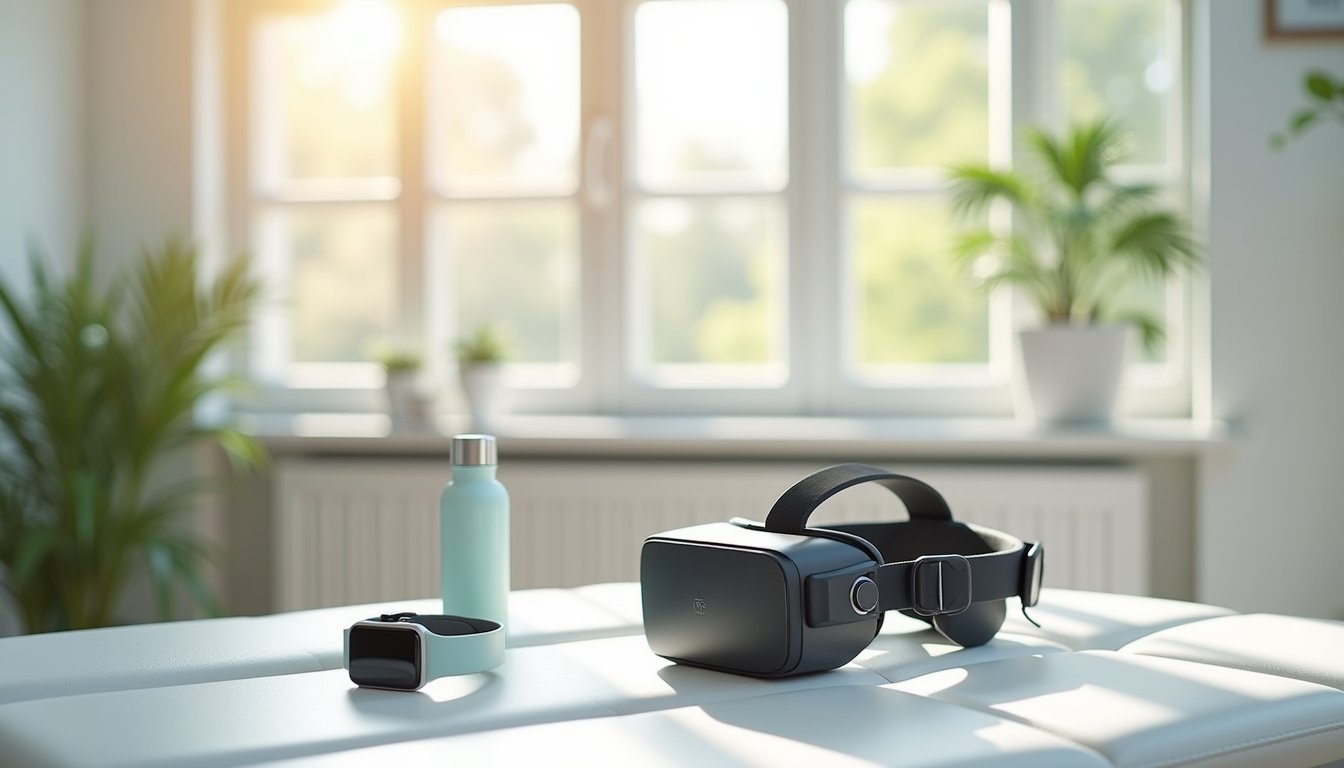
As rehabilitation medicine continues to evolve, technology-enhanced treatment tools have revolutionized how therapists deliver care and monitor patient progress.
You’ll encounter advanced wearable technology like smartwatches and fitness trackers that provide real-time feedback on your exercise form and track your activity metrics between sessions. These devices integrate seamlessly with telehealth platforms, enabling your therapist to adjust your treatment plan based on continuous data. Diagnostic monitoring helps enhance clinical decision-making throughout your treatment journey. Virtual and augmented reality systems create immersive environments that make therapy sessions more engaging and interactive. Regular virtual check-ins and messaging features help build supportive relationships with your therapist.
Robotic devices, including exoskeletons and resistance systems, now offer precise movement guidance and quantitative feedback during your rehabilitation.
Advanced robotic rehabilitation systems provide precision control and detailed performance data, revolutionizing how patients relearn movement patterns and regain function.
These tools are particularly valuable if you’re recovering from stroke or spinal injuries, as they facilitate high-repetition training essential for neuroplastic adaptation.
Through 3D motion analysis and AI-driven applications, your therapist can create customized exercise protocols and monitor your biomechanical improvements with unprecedented accuracy.
Personalized Recovery Plans Through Data Analytics
Artificial intelligence and machine learning now help you receive optimized rehabilitation plans by analyzing patterns from thousands of similar patient cases to predict recovery trajectories.
Your movement data, captured through wearable devices during exercises, provides real-time metrics that inform necessary adjustments to your treatment protocol. The PhysiQ system allows therapists to monitor and measure your exercise performance even when you’re doing them at home.
You’ll benefit from data-driven decisions as your therapist uses predictive modeling to identify critical intervention windows and customize exercise intensity based on your progress metrics. By leveraging electronic health records, your therapist can develop more precise and personalized treatment strategies for your unique condition. This approach delivers patient-centered care that maximizes outcomes while respecting your individual needs and preferences.
AI-Driven Treatment Optimization
Through revolutionary advances in data analytics, AI-driven treatment enhancement now delivers unprecedented personalization in rehabilitation therapy.
AI integration combines your medical history, imaging data, and real-time biometric feedback to create precisely tailored treatment protocols. Studies show that data-driven protocols significantly improve functional outcomes during rehabilitation with devices like robotic exoskeletons. Predictive models analyze your progress against extensive databases of similar cases, enabling dynamic adjustments to your rehabilitation plan. With adherence rates reaching 91% through engaging AI therapy methods, patients are more likely to complete their prescribed exercises successfully. Remote evaluations enable patients in rural areas to receive expert care without traveling long distances.
- Your movement patterns undergo continuous analysis through wearable sensors, allowing immediate correction of improper form.
- Your progress receives real-time tracking against personalized benchmarks, keeping you informed and motivated.
- Your exercise prescriptions automatically adjust based on your performance metrics and recovery speed.
- Your rehabilitation journey benefits from 24/7 monitoring and support through AI-powered virtual assistants.
This data-driven approach guarantees your therapy remains maximally effective while adapting to your unique recovery trajectory.
Motion Data Informs Progress
Modern motion analysis technology revolutionizes how rehabilitation professionals track and optimize your recovery progress. Through advanced motion tracking and data visualization tools, you’ll receive precise feedback on your movement patterns and rehabilitation milestones. The comprehensive cloud-based analysis delivers validated insights within 20 seconds of completing your assessment. The platform’s Quantitative Rehab Score measures your real-time exercise performance to ensure optimal rehabilitation outcomes. Personalized treatment plans incorporate muscle activity data to guide recovery interventions effectively.
| Metric Type | Data Insights |
|---|---|
| Movement Quality | AI analyzes joint angles and movement precision in real-time |
| Pain Levels | Smart algorithms adjust exercise intensity based on discomfort |
| Exercise Adherence | Quantitative tracking of completed sets and repetitions |
| Recovery Timeline | Predictive analytics estimate progress based on similar cases |
Your therapist will use smartphone-based assessments and wearable sensors to monitor your progress continuously, both in-clinic and at home. This thorough data collection enables them to make evidence-based adjustments to your treatment plan, ensuring you’re meeting recovery benchmarks while maintaining proper form and staying within safe movement parameters.
Remote and In-Person Hybrid Care Options

Through virtual check-ins, you’ll maintain consistent contact with your therapist between in-person sessions, enabling real-time adjustments to your recovery plan.
You can access specialized home exercise technology tools that track your movements and provide instant feedback on form and progress. The rising adoption of AI-powered software enables more accurate motion analysis and personalized exercise recommendations.
These digital platforms integrate with wearable devices to share detailed data with your care team, ensuring your hybrid rehabilitation program remains effective and personalized. Video consultations have seen an incredible 38-fold increase globally since 2019, making remote therapy sessions more accessible than ever before. Your treatment will likely involve multidisciplinary teams working together to coordinate your care and improve overall outcomes.
Virtual Check-ins Between Visits
While traditional rehabilitation therapy relied solely on in-person visits, today’s hybrid care model integrates virtual check-ins to enhance treatment outcomes and patient engagement.
These virtual consultations enable continuous monitoring and timely patient feedback between physical appointments, with studies showing improved adherence and sustained therapeutic gains. The integration of telehealth has become especially critical since COVID-19 transformed healthcare, revolutionizing how rehabilitation services are delivered.
- Advanced 3D motion analysis tools now allow your therapist to conduct thorough remote assessments
- Wearable devices help identify potential complications before they become serious issues
- Real-time monitoring tracks your exercise adherence and essential signs
- Virtual check-ins provide immediate support for addressing concerns as they arise
Although only 25% of physical therapists currently manage 1-5 patients weekly via telehealth, this hybrid approach proves particularly effective for younger patients, with 72.5% of 18-24-year-olds successfully utilizing video sessions for ongoing care.
Home Exercise Tech Tools
Today’s rehabilitation programs integrate five essential tech-enabled tools that bridge the gap between clinical and home-based care.
You’ll find digital platforms like HEP2go and Medbridge that create personalized home exercise programs with video tutorials and progress tracking. Wearable tech innovations, including motion sensors and smart resistance bands, monitor your form and provide real-time feedback during exercises.
Remote monitoring systems enable virtual check-ins with your therapist, while AI-driven analytics track your progress and flag potential concerns.
These tools work alongside traditional in-person equipment such as resistance bands and grip strengtheners. Your therapist can implement a hybrid approach, combining clinical sessions using advanced technologies like NASA’s DAP devices with home-based exercises, ensuring you receive thorough care across both settings.
Interactive Patient Engagement Methods
Modern rehabilitation therapy has evolved beyond traditional exercises to embrace interactive patient engagement methods that maximize treatment outcomes.
You’ll experience a dynamic approach that combines game-based motivation and social competition to keep you invested in your recovery journey.
Your therapy sessions will incorporate cutting-edge engagement tools designed to enhance your rehabilitation experience:
- Immersive VR environments that simulate real-world challenges, allowing you to practice functional movements safely
- AI-powered applications that adjust exercise difficulty based on your performance and progress
- Interactive mobile platforms that transform routine exercises into engaging games with achievement rewards
- Social connectivity features that enable you to track progress alongside peers and share accomplishments
These evidence-based methods guarantee consistent participation while providing your therapist with detailed progress metrics to optimize your treatment plan.
Advanced Pain Management Techniques

Advanced pain management in rehabilitation now encompasses a sophisticated array of interventional procedures and evidence-based therapies that target pain at its source.
Modern rehabilitation has revolutionized pain management through precise, targeted treatments that address discomfort where it begins.
You’ll encounter cutting-edge treatments like nerve blocks, which precisely interrupt pain signals along specific neural pathways, and spinal stimulation devices that provide ongoing relief for chronic conditions.
Your therapist may utilize energy-based interventions, including laser therapy for tissue repair and shockwave treatments to enhance healing.
For targeted relief, you’ll benefit from image-guided injections and radiofrequency ablation procedures that disrupt pain signals at their origin.
Manual techniques complement these advanced approaches, incorporating dry needling and myofascial release to address muscle tension and trigger points.
These treatments are performed by specially trained professionals who’ve completed rigorous certification programs, ensuring your safety and ideal outcomes.
Measuring Progress With Smart Monitoring Systems
Smart monitoring systems have revolutionized how rehabilitation professionals track patient progress through an extensive network of digital tools and sensors. Using devices like SmarTrac and wearable technology, your therapist can now implement real-time feedback and compliance monitoring to optimize your recovery journey.
- You’ll experience enhanced accountability as sensors track your exercise completion and movement patterns.
- You’ll receive timely adjustments to your treatment plan based on objective data.
- You’ll gain confidence through self-reporting tools that actively involve you in your care.
- You’ll benefit from more efficient sessions as your therapist accesses pre-organized progress reports.
These monitoring systems seamlessly integrate with existing clinical workflows, allowing your healthcare team to detect potential setbacks early and make evidence-based modifications to your rehabilitation protocol.
The combination of smart sensors, mobile apps, and centralized data platforms guarantees thorough tracking of your therapeutic outcomes.
Frequently Asked Questions
How Long Does Insurance Typically Cover Modern Rehabilitation Therapy Sessions?
You’ll typically find insurance coverage varies based on your plan type.
Medicare Part A offers up to 90 days per benefit period, while commercial plans usually cover 20-30 outpatient visits annually.
Therapy duration for inpatient rehab typically spans 30-60 days under commercial insurance.
Initial authorizations often cover 2-3 months of treatment, and you’ll need documented progress for extensions.
Chronic conditions may qualify for longer coverage through specialized policies.
What Medical Conditions Might Prevent Someone From Using VR Rehabilitation Tools?
You shouldn’t use VR rehabilitation tools if you experience severe dizziness or have a history of motion sickness, as these conditions can worsen during VR exposure.
Cognitive impairments from traumatic brain injury or stroke may limit your ability to engage effectively with VR systems.
Additionally, you’ll need to avoid VR therapy if you have recent eye surgery, uncorrected vision problems, or vestibular disorders.
Severe mobility restrictions may also prevent proper VR equipment use.
Are Modern Rehabilitation Techniques Covered by Medicare and Medicaid?
Yes, Medicare and Medicaid provide rehabilitation coverage for many modern therapy techniques.
You’ll receive coverage for medically necessary services up to $2,410 (PT/SLP combined) under Medicare’s 2025 threshold. Your therapy eligibility extends to both traditional and emerging treatments, including telehealth services through March 2025.
When you exceed the threshold, you’ll need the KX modifier and medical necessity documentation to continue coverage.
Standard services like physical therapy, occupational therapy, and speech therapy are typically covered.
How Soon After Surgery Can Patients Begin Using Robotic-Assisted Rehabilitation Devices?
You’ll typically begin using robotic devices within 2 weeks post-surgery, once you’ve achieved basic mobility with assistance.
Your surgical recovery will initially focus on pain management and wound healing in the first 1-3 days of hospitalization.
During your first assessment visit, you’ll undergo trial sessions to determine device suitability.
Early sessions emphasize controlled movements, with therapy occurring 3 times per week to optimize your progress and prevent overexertion.
What Certifications Should Therapists Have for Administering Advanced Rehabilitation Techniques?
For advanced rehabilitation techniques, you’ll want therapists with specialized certifications matching your needs.
Look for providers holding ABPTS specialization with 2,000+ clinical hours, or Advanced Manual Therapist (ACOMT) credentials for complex cases.
Board-certified therapists in Physical Rehabilitation (BCPR) offer expertise in orthopedics and neurology.
Additionally, make sure your therapist maintains current certifications in their specialty area and has documented experience with specific rehabilitation techniques you require.